
I’m not shy of exploring new genres and styles, but try as I might Persona 5 (And Persona 5 Royal) never gripped me. I got to the second major boss on Persona 5, and the penultimate major boss in Royal, but the idea of finishing them was simply not of interest.
Not all games are for all people, so I figured maybe I just wasn’t meant to enjoy the genre: I wasn’t the target audience.
Then I played SMTV:V and absolutely loved it.
For the unitiated that’s Shin Megami Tensei 5: Vengence. For the even more unitiated, here’s a brief bit of homework:

Persona vs SMT: Are they the same?
Both the Persona and Shin Megami Tensei series are made by Atlus. Both of them are creature-collector RPGs. Both have a story revolving around a young party of protaganists fighting gods (And sometimes even fighting God).
Persona games focus more on being a life/time management sim with some light dungeoneering, while SMTV provides next to no story elements and instead gives you hundreds of Demons to summon, combine, stack buffs on and fight bosses with in a semi-open world.
Persona is story-first. SMT is gameplay-first.
You’d be forgiven for thinking they’re two names for the same game, but having played Persona 5 and hated it, and then played SMTV:V and adored it, that’s clearly not the case.
How SMTV:V pandered to my western foolishness
SMTV was always going to resonate more with me because of its focus on deep, engaging gameplay. It’s not that I can’t enjoy a story game, but evidently if the story is Persona 5’s I can’t.
In SMTV I could form a party that was truly my own, that I’d earnt and that I’d trained myself. In Persona you’re more just ticking boxes and solving combat puzzles, rather than exploring a more free-form combat system like SMT delivers.
SMT had levels clearly displayed as I explored, and I could get a good gauge on my own power pretty easily. Sometimes a harder foe could be trivialised with certain status effects, but even then it is as deep a system as elemental damage in regards to that “cheese”, rather than being shut down by Boss Immunity.
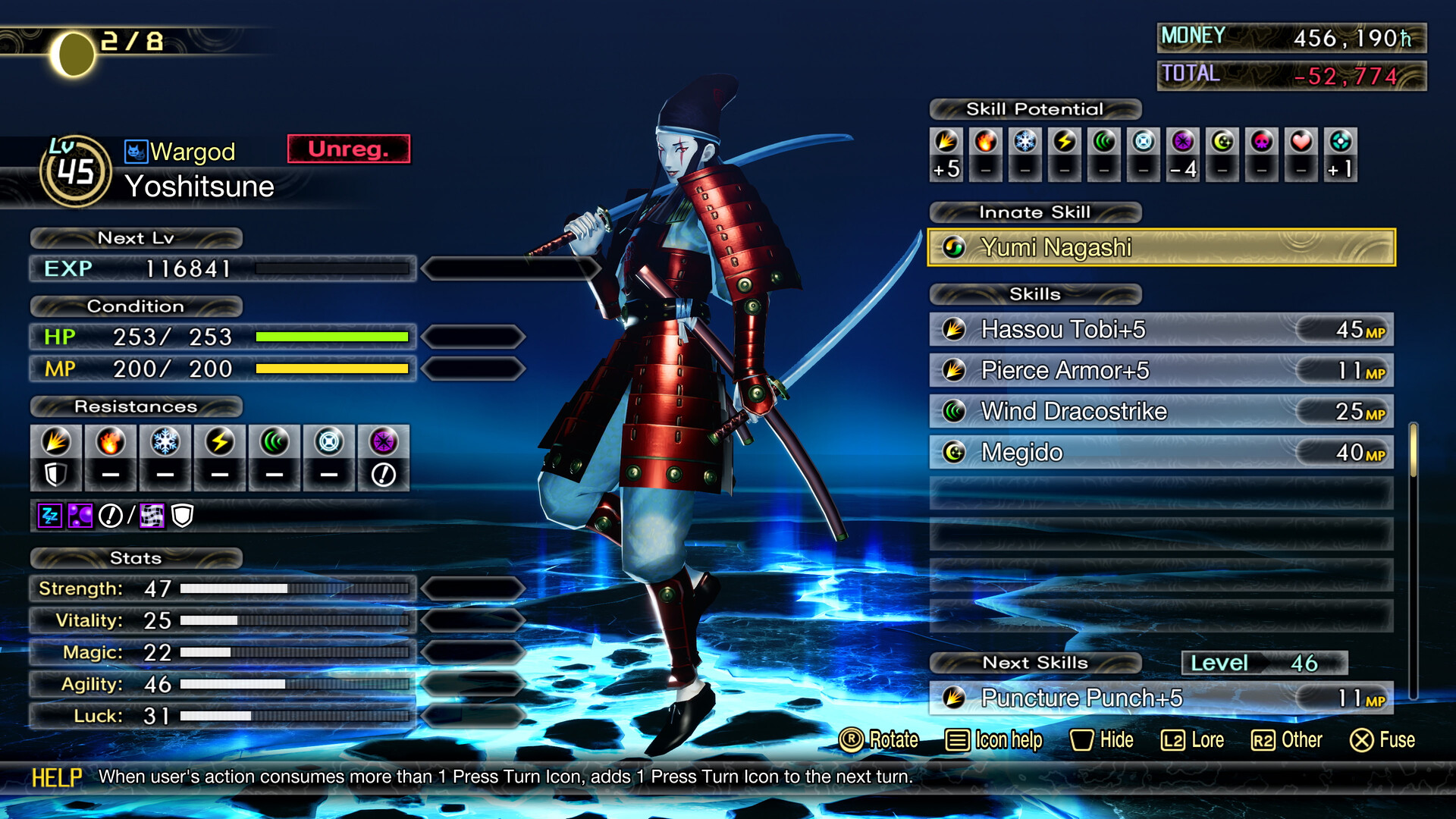
In SMT I had the option to incorporate status effects into my builds, whereas in Persona every major enemy in the game is immune or resistant to these effects. This made Persona feel, basically, shite.
SMT also made itself more appealing to players like me with a more intuitive open world and progression system, without the need for social links and time management. Having said that, it was never those elements that turned me off of Persona, it was the fact that for a game about relationships and stories it was incredibly vapid…
Persona 4 Golden: The one that got it right
Months later I decide (upon request from my fiance, admittedly) to try Persona again. This time, though, it’d be Persona 4 Golden. As it would transpire, I don’t hate the Persona series…I just hate Persona 5.
Persona 4 Golden understands that it is a series focused on friendships and mystery, and so it actually coherently and competently displays those friendships and mysteries.
Main Story
In terms of the main story it’s infinitely more interesting thanks to a “Murder mystery” style. In Persona 5 you are shown the villain’s perspective and off-screen events constantly, so far as to show you the exact nature of the deaths that start the whole thing. Meanwhile, Persona 4 is okay letting you work things out yourself, it’s okay not explicitly stating the same story beat 50 times.
Companions and Social Links
When it comes to the confidants and social events, P4G makes me feel like these characters actually give a damn. No one in Persona 5 is actively interesting, or funny, or witty. Persona 4 manages to outdo its own successor in almost every way when it comes to the writing and presentation of these social links.
Characters will react positively to you taking the mickey a bit, rather than just pining for your every word to be praise and worship. I don’t feel like Chie and Yukiko are “Romance options”, I feel like they’re characters that the MC can, as it happens, romance.
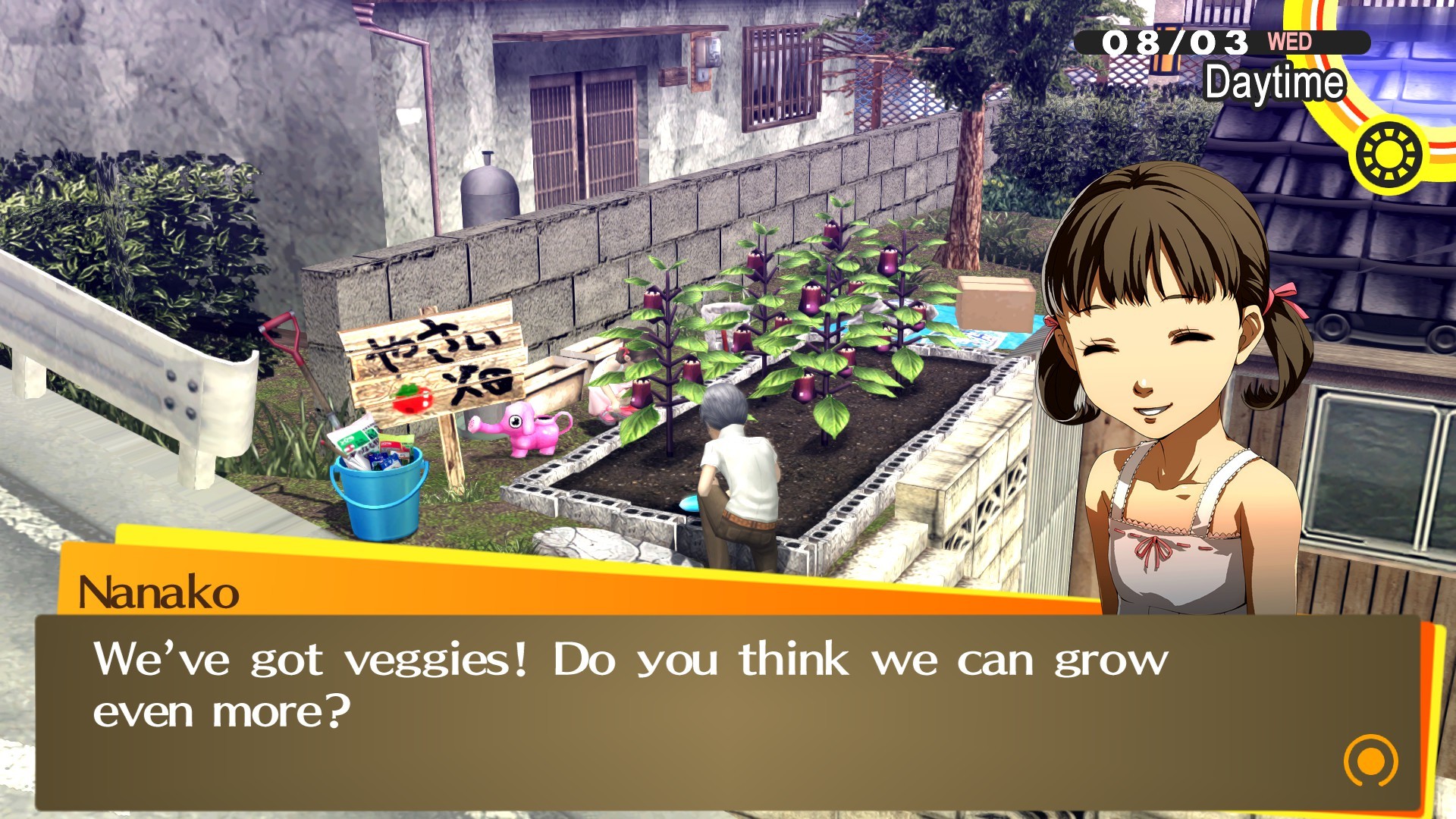
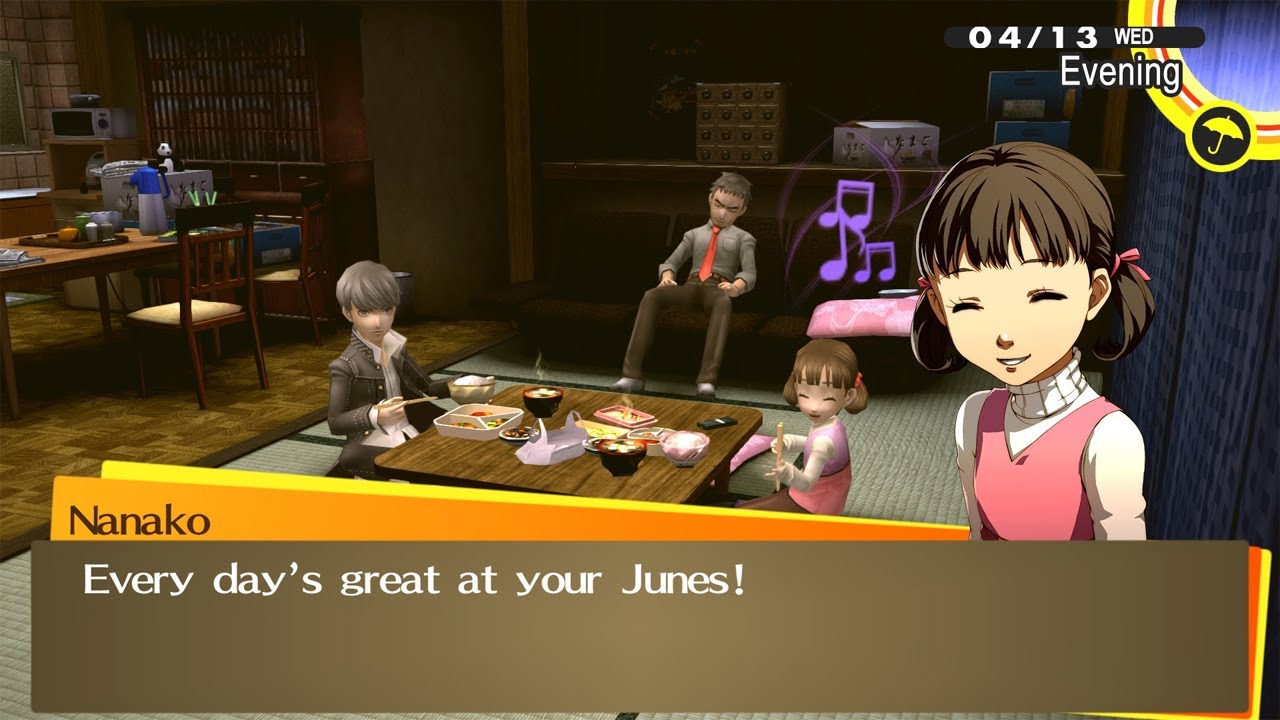
Outside the party, you have a younger cousin Nanako. She illicits exactly the same parental protection response that Diana from Pragmata does, and her singing along “Every day is great at your Junes” when the advert plays on TV is the sort of personal, emotional and irreverant touch Persona 5 could never commit to.
A gripping story and well-written confidants: But what about combat?
The combat in Persona 4 is easily weaker than Persona 5 and by extension is a mere footnote compared to SMTV. Fortunately, the story is good enough I don’t mind. So I press on, and complete the first couple of dungeons.
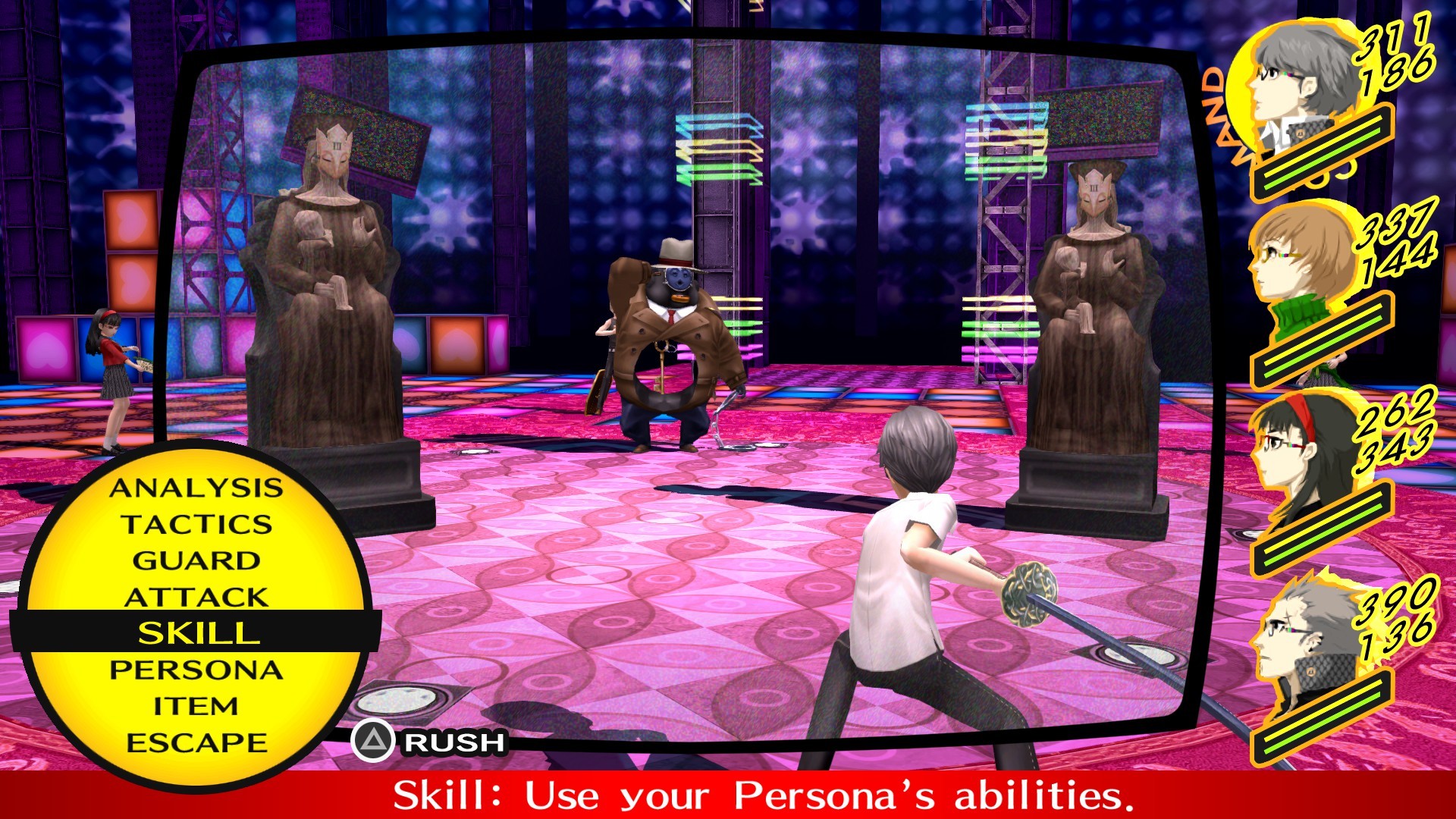
Important enemies are immune to all statuses, bosses can one-shot you with multi-hit moves if you don’t happen to pop a mirror at the right time, so far so Persona. I completed the second dungeon (themed like a bath house for readers curious exactly which one I am referring to without spoilers)and the arduous, tedious, luck-heavy boss fight almost made me drop the game.
But unlike Persona 5, I actually wanted to continue. This is why story matters, it can make sub-par gameplay more manageable. In my curiosity to continue I thought I’d Google the boss I fought and just see if I was a complete idiot…
Persona assumed I was it’s ideal audience member, I am not
I was, in fact, being a complete idiot.
Not because I missed a mechanic or did anything I would consider “wrong”. No, I am only guilty of being a normie gamer. See, it’s very common in China and Japan and much of the eastern world to want, accept and enjoy grinding. I’m not impartial to grinding myself, but the games I associate with grinding are ARPGS and games with level-capped areas or bosses, or straight-up grindfests like Gacha games or F2P bullshit.
Persona 4 never tells you an “expected” or “recommended” level…I assumed the boss was hard and tedious because the boss is hard and tedious. In fact, it was hard and tedious because I was playing it wrong…
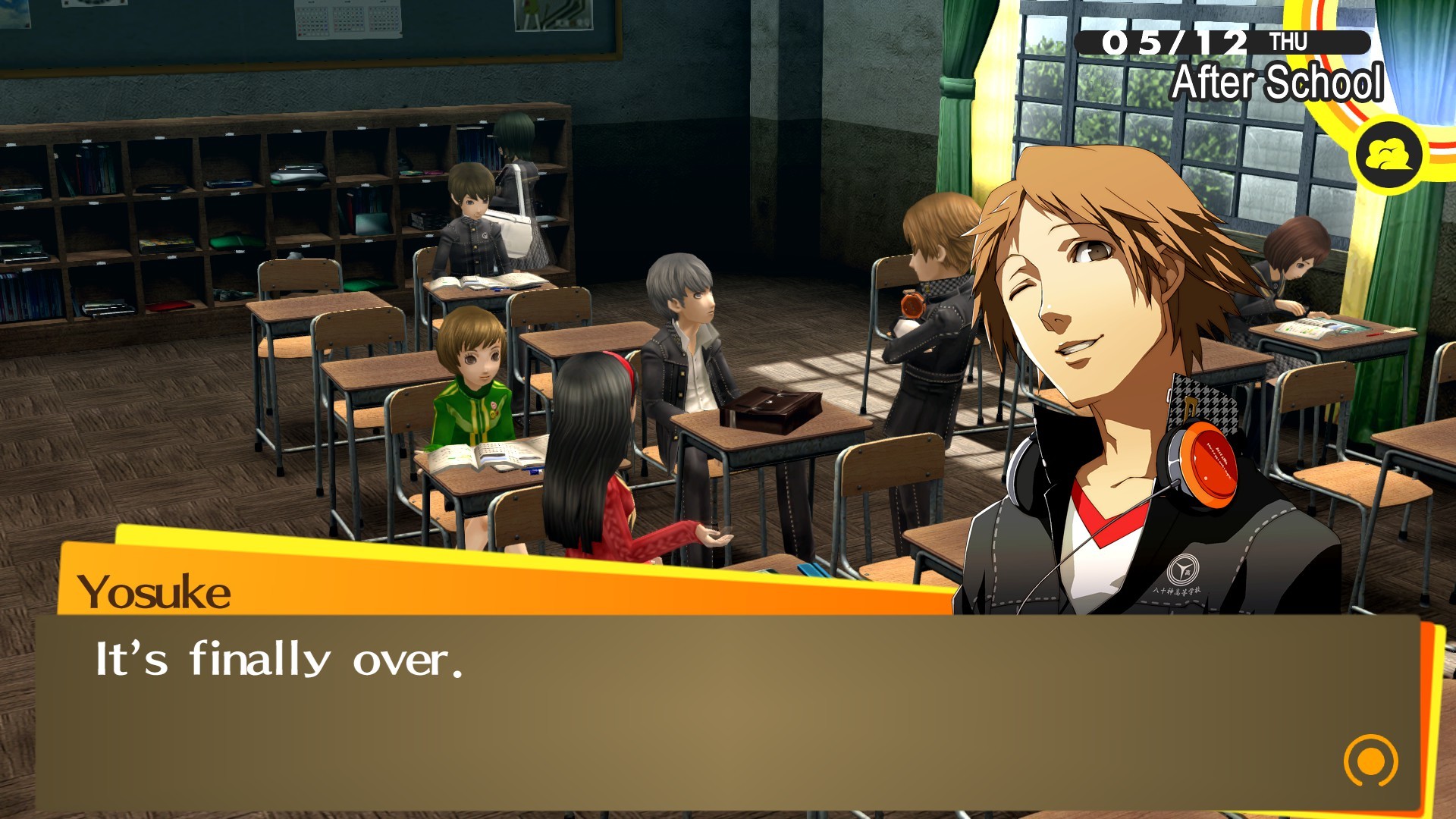
Now we can finally get to the big learning point: The lesson that would change how I play Persona games and, maybe, make me enjoy them how they are meant to be enjoyed:
One player said they’d just beaten the bath house at player level 65.
No one batted an eye.
No one said “That’s overlevelled af, what are you doing?”.
Care to guess what level I was?
Player level 20.
I scroll some more, transfixed with the idea we are meant to have, with no prior instruction from the game, grinded up so many levels. In my search I found that the recommended levels for each dungeon raises by 10, starting from 15. So, the second dungeon would be 25, 3rd would be 35, etc. Since the bath house is second, I was 5 levels below that recommendation.
Now, my complaints are seen in a whole new light. Suddenly I’m not an experienced SMT player finding Persona too hard and tedious, I’m an absolute dingleberry who didn’t get to a high enough level then complained things were too hard. It’s like when someone complains Margit is too hard in Elden Ring before they’ve explored Limgrave for some talismans and levels, you just want to scream “Well of course you’re having a miserable time!”.
My defence is that Persona 4 doesn’t communicate any of this…
I know what the game expects, so now I can play by its rules
But, now I know. And now I know, I can go forward not blaming the game, but recognising that this series was made for an audience who on some level expect this. They know this already. If the game spelled this out for the player it’d be like telling a racing game player that R2 is accelerate or a shooter player that switching weapons is faster than reloading.
Armed with this knowledge – actively accounting for how the game is made and what it expects me to know and do – I look forward to finally finishing a Persona game.
The onus of responsibility for enjoying a game isn’t all on the creator of the game.
You have to work with the game, with its expectations of you. If you aren’t going to try and work out who the killer is, you don’t watch a murder mystery, if you aren’t going to be invested in your troops and make tough decisions then you don’t play X-Com. As it happens, if you aren’t going to grind dungeons when you have time to then you don’t play Persona.
(I will forever be proud of defeating the Bath House at player level 20, though, that has to be a challenge run of some kind)





Leave a Reply