
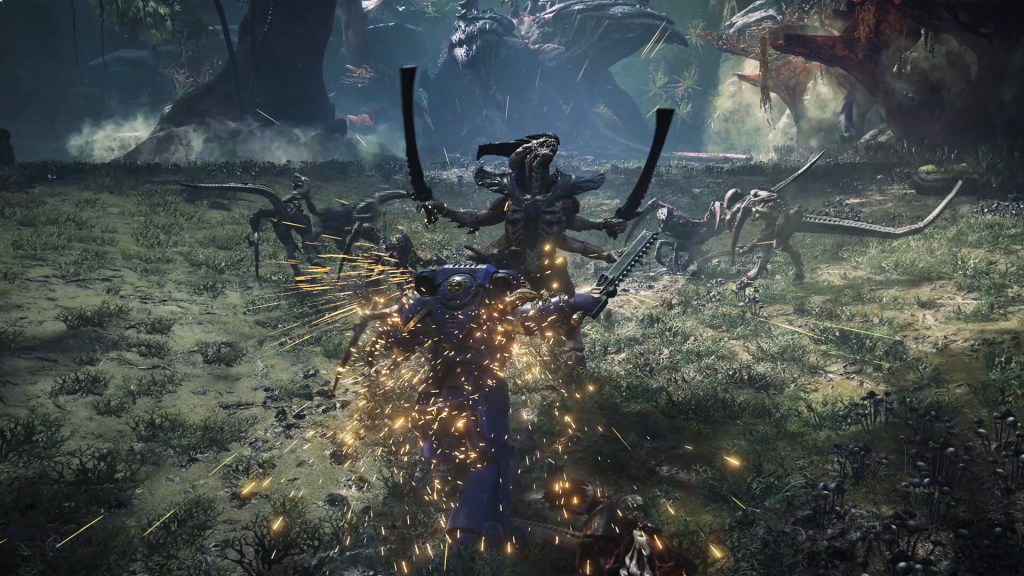
When I was a wee lad, the closest I came to city-building and management gameplay would have been obtuse amounts of turtling in Dawn of War (For those unfamiliar, turtling is a strategy in RTS games where you just sit in a well-defended base and build a “I click attack and win” size army over the course of a game). Even then, I always preferred to play factions with as few resource requirements as possible, to the point where I still don’t quite know how you’re meant to keep enough Waaaagh as Orks or Souls as Dark Eldar.
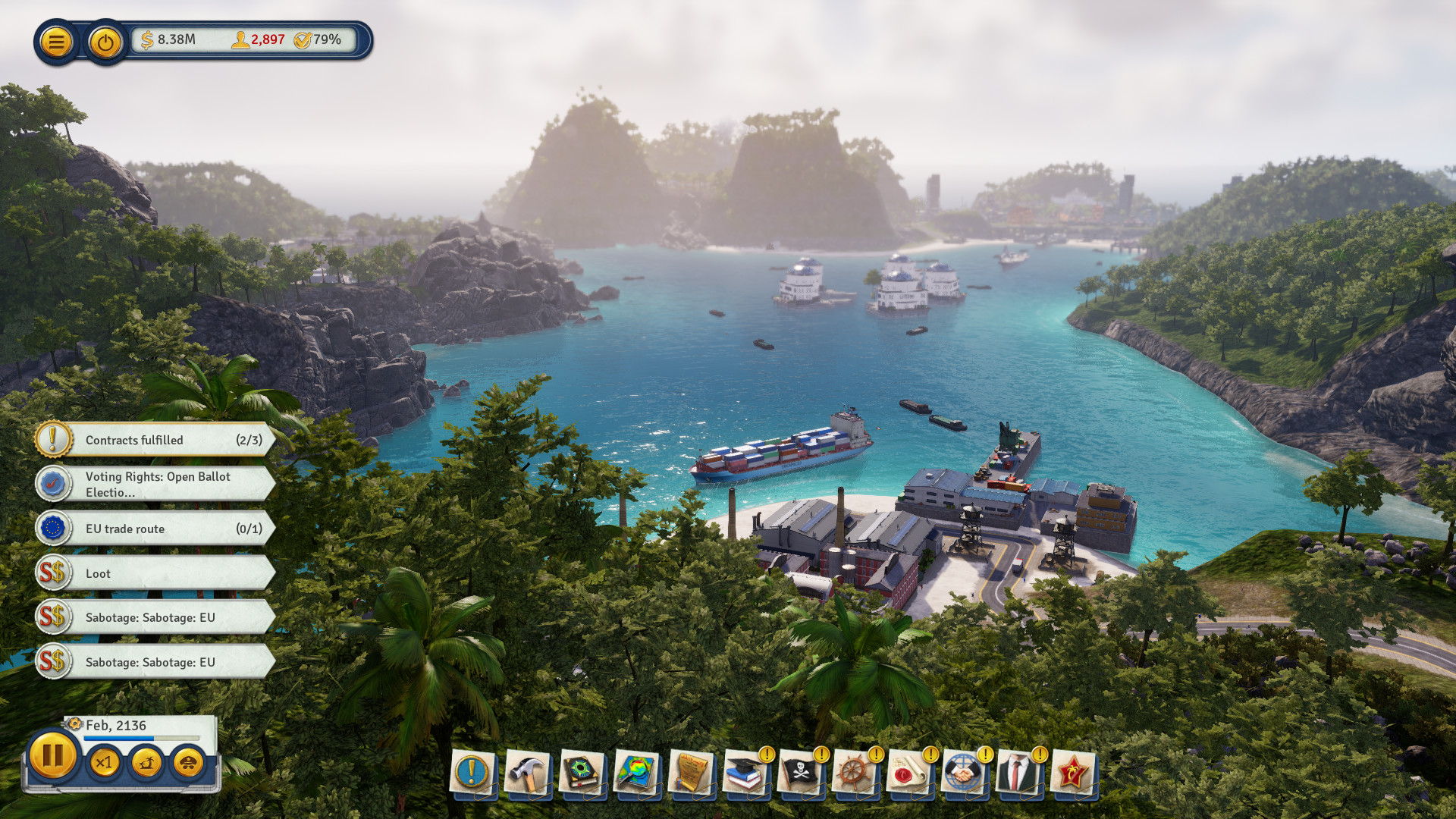
My first foray – Tropico and cheese
Through the years I’ve dipped into some proper management games, rather than just RTS’, but none have ever stuck. I played a few of the challenge maps in a Tropico game, but that was purely because the challenge was to get a rich and prosperous town solely through the sale and production of cheese – so of course I was interested in that.
The moment I started having to fiddle with time speeds and population and travel times and stock changes and rebellions and the rest of it, I didn’t feel like I was playing a game anymore. I sort of felt like it was playing me.
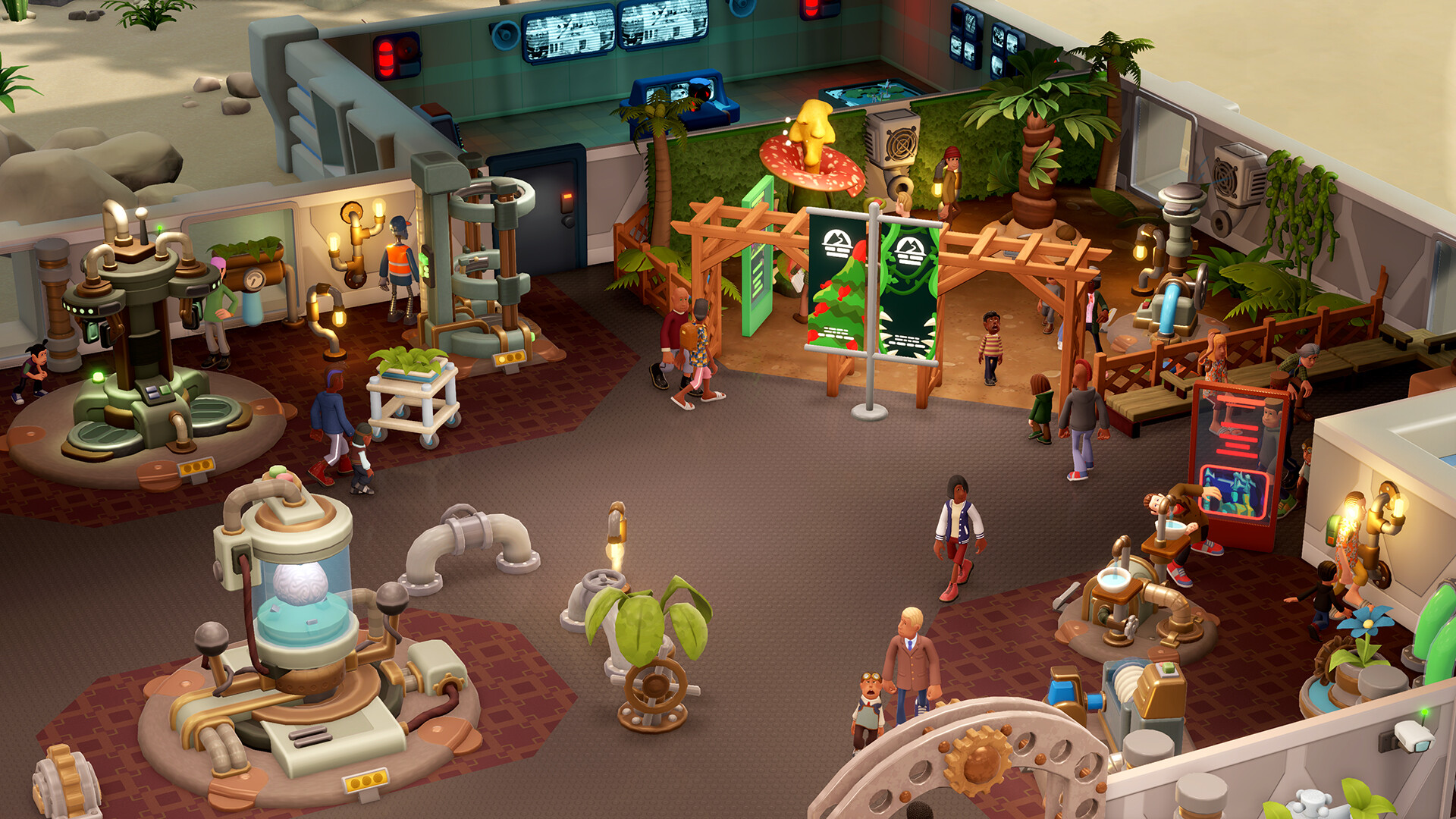
The second shap – Two Point Museum
Years later I’d try Two Point Museum. This was a lot more promising. I think the fact that I have been to a museum and vaguely understand the idea of one meant I could engage more with Two Point, as opposed to Tropico in which you’re an island-bound dictator who’s name might start with “C” and end in “astro”.
While there were a million things to keep track of, I never felt that Two Point royally ruined me for neglecting just one or two of those things in short bursts. This also provided valuable learning experiences – things like building a staff bathroom really cuts down on your staff break time as they aren’t out on the museum floor queuing with the public.
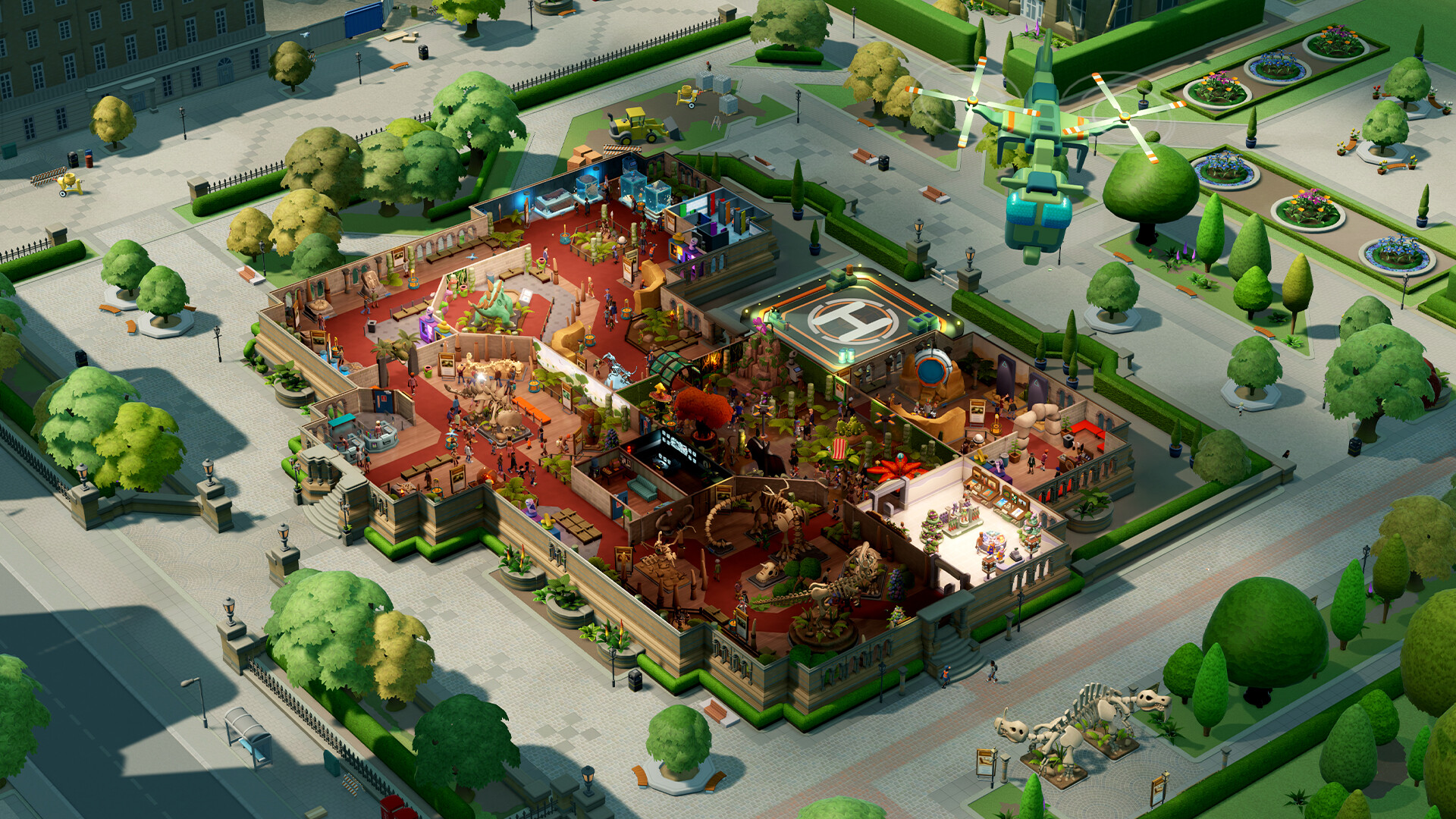
I still wasn’t fully sold, because Two Point pushes this customisation element that the game’s controls and functions unfortunately don’t live up to. There’s no easy way to move an entire room, for example, and decorations can feel a bit spam-y at the start.
However, the game introduced something vital to my eventual descent into management-game fandom: progress that wasn’t a tech tree. By completing expeditions and investing in staff you weren’t just building wealth, you were uncharting new areas and streamlining processes and making your playthrough feel like your own.
The revelation – Alternative progress systems break the mold
In most management and city-builder games you’re sort of expected to be ready to build out a tech tree and meet a few hundred mathematical demands. Two Point has all that, but in between those decisions you’re taking part in expeditions. These are out-of-museum trips that involve choosing staff members to counter expedition problems and earning new exhibits upon completion. It isn’t rocket science (except when you’re getting exhibits for the space museum, because then it actually is) but it’s enough of a mission, quest, thing to be getting on with between bouts of financial computation and satisfaction juggling.
It wasn’t perfect, but it put the idea in my head – if a management game were to have a whole other type of game strapped onto it, I’d probably enjoy both parts equally.
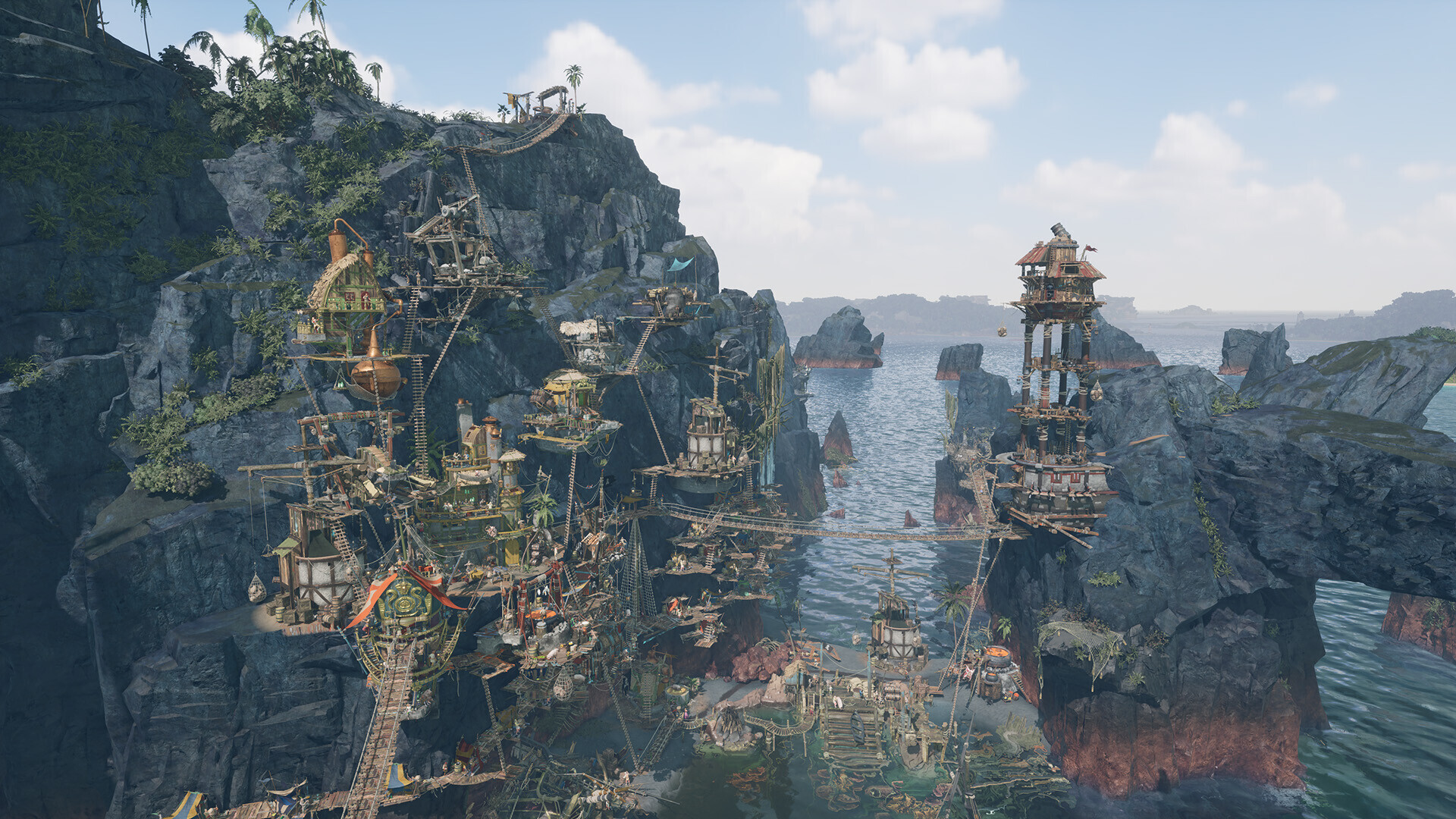
Enter Corsair Cove.
Corsair Cove is a city-builder management game where you’re creating closed resource loops to fuel your sailors who can then sail your ships. You’ve got housing, food, gold and a whole host of other ever-increasingly-hard-to-get resources to look out for. So, what’s different?
Two main things stick out as reasons I love this game despite never liking the genre before:
Your tech tree is a compass, the world is your oyster.
Instead of boring research trees you get a compass which points to the 4 key pirate principles. These are Notoriety, Wealth, Power and Exploration. You don’t earn generic points and choose what to invest in, you only earn points for principles you actually abide by. Build lots of warehouses? You get some Wealth points. Raid a few of the Crown’s Lockups? You’ll gain Power points. This means you have, at all times, at least 4 different quest paths, challenge lists and crew types to be exploring, planning around and aiming for.
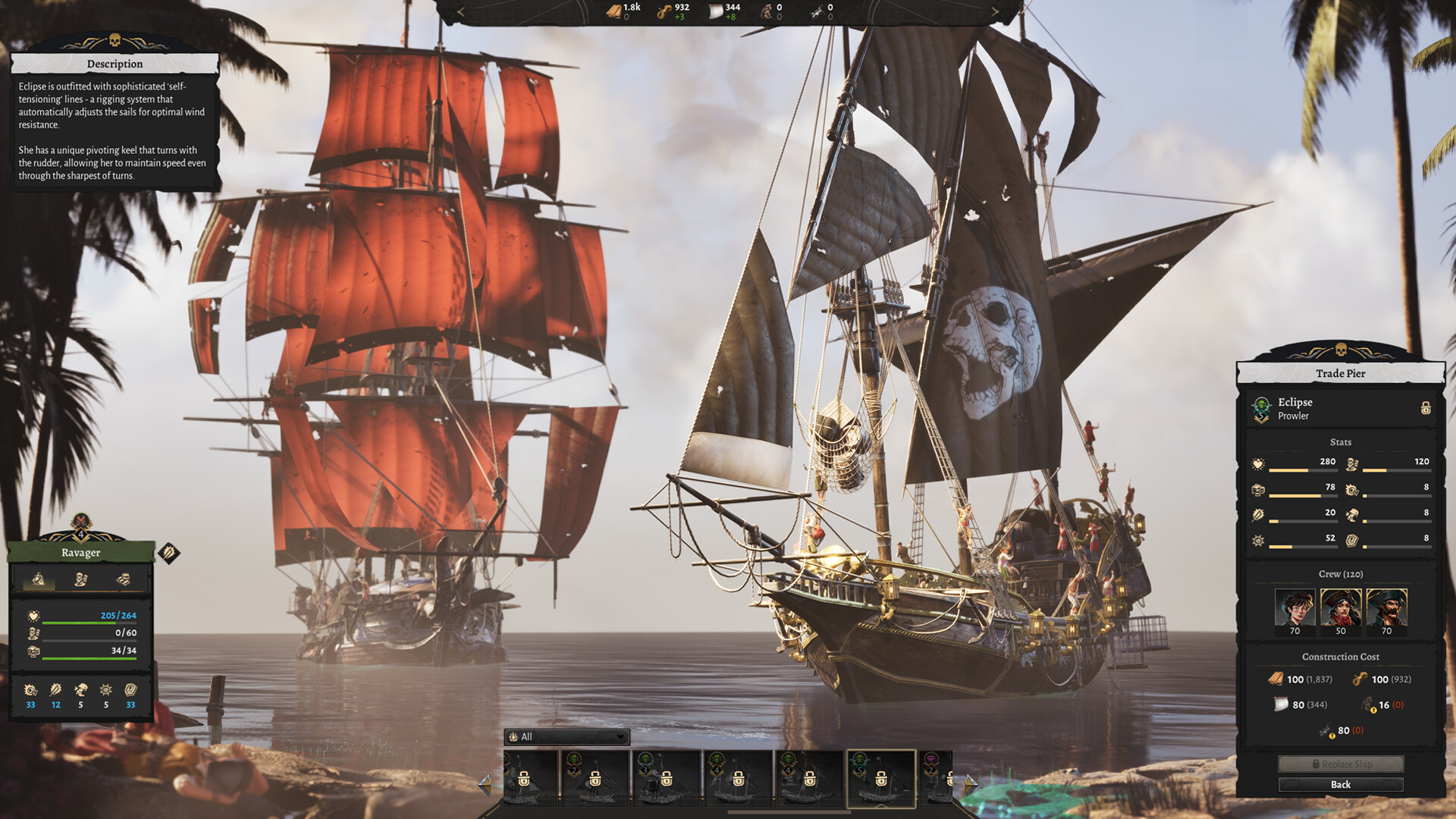
Maybe this freedom seems like a hat on a hat, but it’s exactly the level of complexity that actually makes me feel that my choices, my management and my city-building is real gameplay. I feel player agency in a genre I never have before.
Multiple solutions to lateral, organic problems.
In management and RTS games I have tried before one of the main stopping points is that I feel I’m not playing the game, I’m just doing what mathematically needs to be done to pass the level, win the battle, etc. In Corsair Cove you’ll develop problems usually because of your own choices, and it’s your own choices that will get you out of them.
For example if you see that a new pirate cove you have set up is lagging behind on wine you don’t just immediately build another wine production ring (although, you could if you had the time and resources), you can instead focus on optimising movement through your islands.
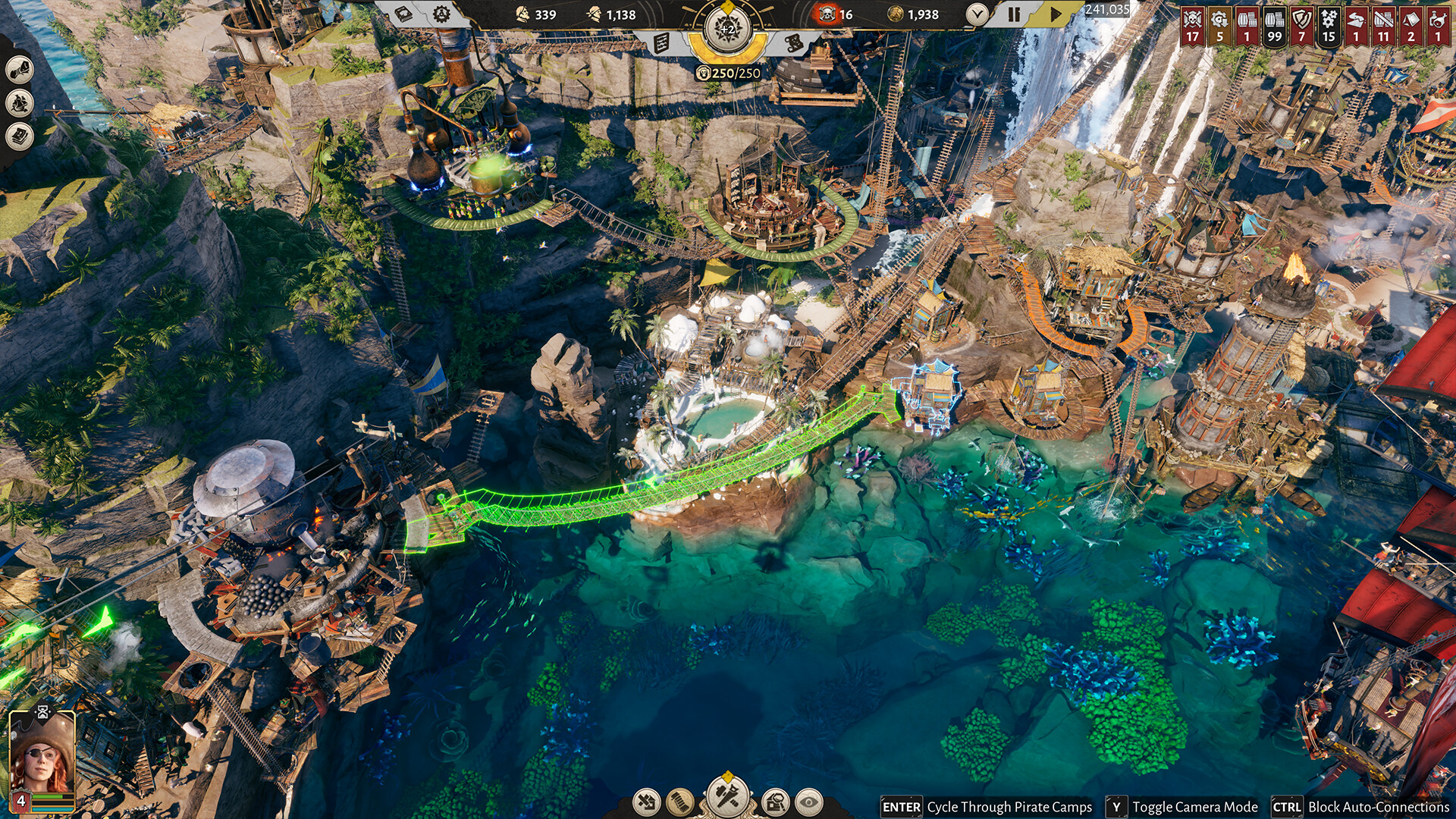
Maybe this means installing a zipline from the highest peak near the winery, so pirates can shuttle crates downwards at far faster speeds. Maybe it means hiring more Fetchers, or replacing sloped rope bridges with secure wooden cliff-anchored paths where possible. Maybe you link that entire pirate cove to a different one you have around the other side of the island, creating a full 350 degree loop.
Or, maybe, you forgo all that and send a second ship from your fleet out to do some good old fashioned looting, bringing back gallons of wine for the other crew (who can then go out and do the same for the first!).
A card combat game, Mount & Blade overworld AND city builder in one
Corsair Cove grips me because it doesn’t dumb down any part of itself for the benefit of others. The card-based encounters are simple, it’s true, but they’re about the same amount of reactivity as running auto-resolve or pre-set formations in a Mount & Blade game.
Speaking of which, once you send out a crew and a ship in Corsair Cove they don’t just disappear and reappear in 5 minutes like expeditions do in Two Point Museum. The crews and ships in Corsair Cove exist in a fully rendered overworld, running in real(game)-time alongside your town. Every moment you spend directing your fleet is a moment your coves have to survive on their own, and both of these games play out entirely based on your choices and the pirate principles you invest in.
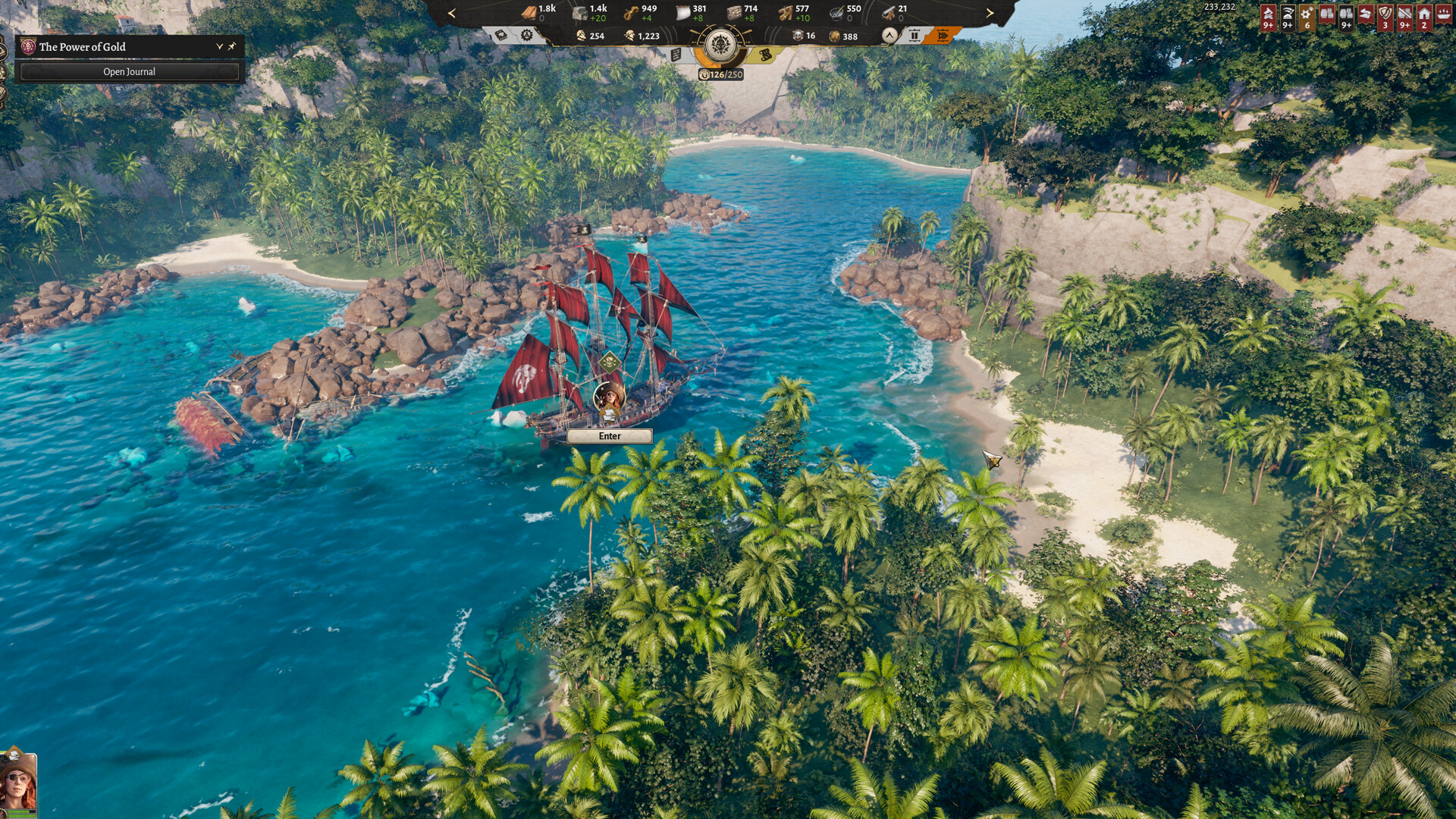
Compare that to Two Point Museum, where you unlock new mechanics and staff types only in their respective museums (and then later across others, but only after multiple hours of gameplay in each individual museum first) and very little reason to diversify until explicity told to for a quest – and it becomes clear why Corsair Cove clicks for me. It lets me use the mechanics of the game to solve broad, sweeping objectives and milestones instead of being shoe-horned into any specific task (and therefore any associated builidng and management guff that comes with said task).
I always thought management games were too complicated and dense, and that’s why I didn’t like them. As it happens, it’s because they were too slow. Having the weight of 4 pirate principles, each with main quests, boat types, captains and pirate cove upgrades all on top of a standardly robust management experience is just the hit of executive function I needed to really get this genre.
My first full-on city builder also happens to be 2 other genres
I don’t think I’ll enjoy a management game as “pure” as Cities Skylines, but knowing that the genre does, at last, have games made for me? That’s a great feeling. I’d never demand Cities Skylines let me send an army to attack another city and suddenly become a first-person-shooter for 5 minutes, but if it did I’d definitely enjoy it more.
Genre fusions like Corsair Cove are fantastic, and I look forward to seeing some absolutely whack combinations in the future. Hey, maybe that new singleplayer roguelike fighting game will finally get me into that genre, too…




Leave a Reply