With the games industry how it is and the rest of the world sort of…*Gestures broadly* I do get a majority of playtime from subscriptions. Game Pass for PC and PlayStation Extra on console are where probably more than 75% of my played games come from now, and I can only really justify buying a new game fresh on release if it’s from an indie dev I trust, or there’s been a playable demo. As someone who has always enjoyed a variety of genres and styles (and production values) this arrangement suits me for now – discomfort over owning nothing aside.
Combine that with my new household internet that is 10x faster (somehow not an exaggeration) than my old line, and I find myself jumping into different games and accessing that variety more and more often. The latest “Why not?” is Skate Story on PlayStation Extra and it will now stand with the likes of Inscryption as a personal underdog GOTY pick.
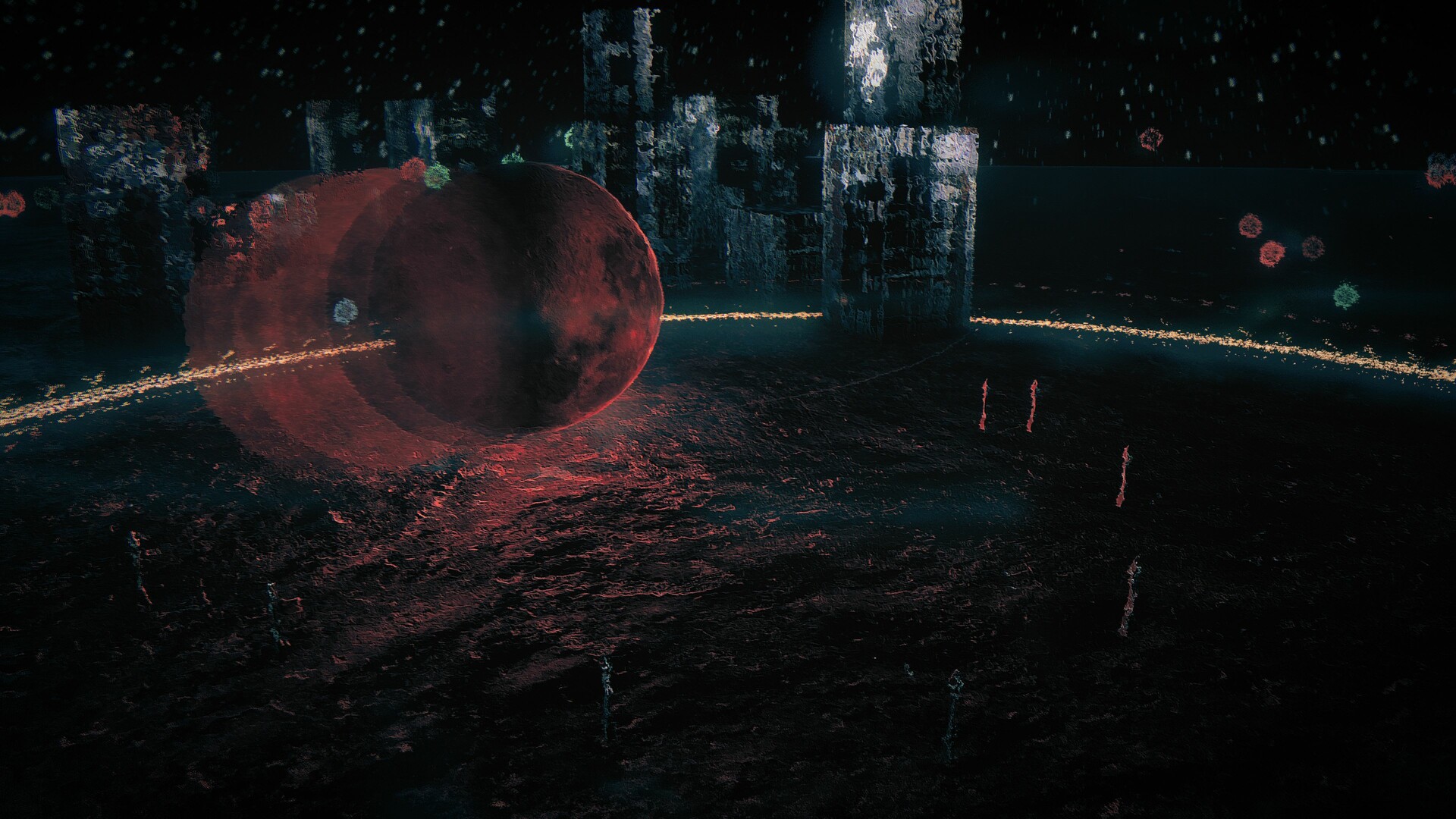
Skate Story is a game about traversing the Underworld as a Demon made of glass and pain. On a skateboard. The details of such are best left to playing the game itself, but you’ll be skating and questing through distinct layers of the Underworld in order to consume their Moon(s). Leaving the synopsis vague makes the game sound insane, but adding context and detail would only confirm the insanity and rob you the chance to discover it yourself.
Skateboarding focused on quality over quantity
This isn’t a Tony Hawk game.
Tony Hawk’s Pro Skater series’ is undeniably (and quite rightly) the largest gaming influence on skating, but games like Skate prove that skating doesn’t have to be arcade-y and bombastic, it can be grounded and celebrate the “small” successes and licks of a finely-tuned line. In real life you’re not doing a double-heelflip onto a rail and a 360 Shove-It off the other end as you cruise down your high street on a whim, and Skate aimed to make a “simple” Ollie hold the weight and importance it does IRL.
Skate Story takes this idea further and creates its own hybrid system. Tricks aren’t about fighting-game level controller inputs, instead they are assigned to single or (for advanced tricks and rotations) double inputs. Doesn’t this make the game too easy? Maybe if all you ever had to do was skate in a straight line doing trick after trick, yes…

But, Skate Story very rarely expects you to actually pop off like that. The only times you need to get a certain score in a certain time are the Moon boss fights, and even then the game provides plenty of opportunity to gain score through combo-finishers, interactive environmental elements and unique gameplay gimmicks per Moon.
Expressive, emergent lines you feel genuinely proud of nailing
What the “simple” input method of Skate Story allows is a focus on second-to-second movement, positioning, speed, and purpose. Taking the time to switch to Nollie stance for a higher pop can be worth more to you than pulling off a fancy 180 kickflip, because your goal is often traversal-based.
Learning which heights each trick pops and then timing them precisely to maximise that potential actually make Skate Story more like Death Stranding than Tony Hawk’s. It’s a game about moving through a world with your own style, using the tools you have available and picking up new techniques along the way.
All of that is how the game runs, how the scenes are set. All of that is the frame, the wire-mesh…the Demon.
But there’s more to Skate Story, there’s the music, the visual mess, the writing of the irreverent souls wandering the Underworld…the Soul.
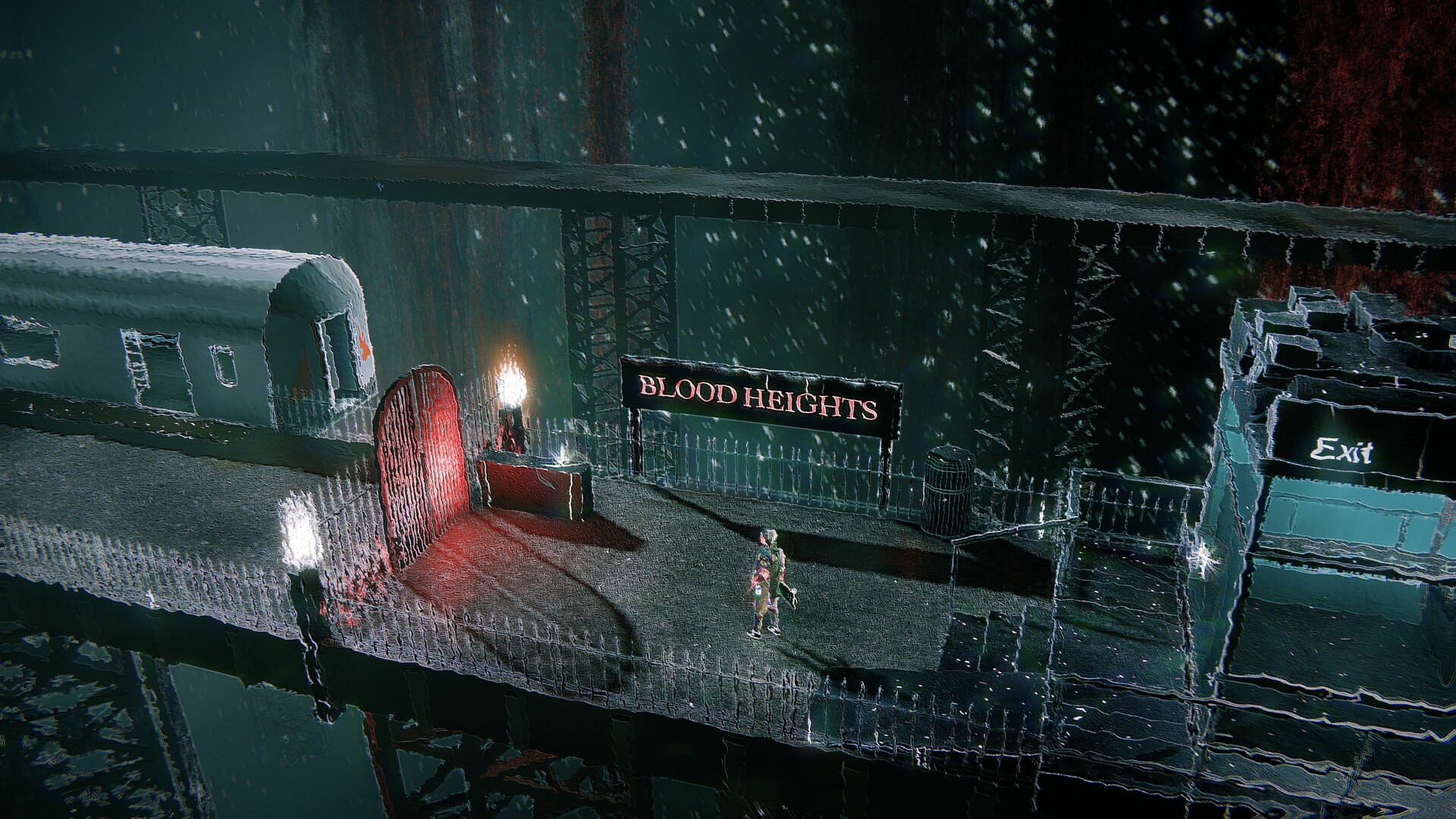
If the game was mechanically identical to the final product, but with only textureless blocks and no music, there’d be no Skate Story. Mechanics are not what make this game pop (pun intended), it is the union of those mechanics with a world that exemplifies them. The world and style are not what make the game pop, it is the union of the world and style with tight and expressive mechanics.
The union of Demon and Soul.
Iam14andthisisdeep meets actually beautiful philosophical quandry
Putting aside the waves this game makes with it’s overarching story about identity, rebellion, purpose and unity; Skate Story excels at providing little characters that fill the void. Where it would be easy to have only the skating gauntlets and nothing else, Sam Eng goes out of his way to include Quirky Little Guys™ to provide relief, insight and motivation. From Rabbie the rabbit to Froute the frog, and even Larry the floating skull! The menagerie keeps the game fresh and surprising throughout.
Just like Inscryption, Skate Story takes a game genre and stretches it, pulls at it, shakes it around and impales it on the spear of innovation. What begins as a stylistic and atmospheric journey culminates in truly emotional scenes, with two specific scenes in particular mirroring each other.
Spoilers for both Inscryption and Skate Story ahead
It’s no secret that my favourite line in possibly all of gaming is
“It’s okay. We don’t have to keep score”.
This moment in Inscryption transforms a story concept into an engaging and actualised reality. It takes the potential emotion of the game and turns it into real tears.
In the same way, right near the end, Skate Story actualises its emotional core. It’s actually an eerily similar vibe.
Inscryption’s line is set as the game deletes itself, assets being removed as you play against Leshy, your first opponent from Act 1. Eventually, the scoring system itself disappears. Leshy has been obsessed with playing, winning, adding a cost to those points, seeing how far you’ll go for them…and yet now, at the end of everything, when the scoring system blinks out of existence, he says
“It’s okay. We don’t have to keep score”
And so you play. You keep playing. For no purpose other than to keep eachother company in your final moments.
Skate Story recreates the emotional core of this scene to-a-T. Near the end of Skate Story you finish your quest. You ate all the Moons. As everything is ending, as the Underworld is about to cease existing, The Skater finds themselves on a stage. All the Quirky Little Guys™ are in the audience, and there’s even a live camera feed up above you of The Skater as you play.
The stage has a grind rail, an angled bench platform, two ramps, a smaller kicker…and a timer.
The Skater starts the timer.
You then have just shy of 3 minutes to skate. Normally, this is where you’d be racing to consume a Moon and claim it as a prize. However, you have all the Moons. The mission is done. The Skater, and everything in the Underworld is facing it’s inevitable final doom.
But you have 3 minutes and a skateboard.
So, you skate.
No Moon health bar.
No trick sequences to match.
Just time, a skateboard and the end of the world.
As a player you could just sit there and wait, but I doubt anyone did. I reckon we all did the same thing, and tried to pull off just about every single lick and spin and beautifully simple grind transfer we could. We manualled around the stage, we popped a 180 Varial Hardflip. We bailed, and tripped, and stubbed the board below the grind edge. We got to be ourselves – with no other requirements…
Both of these games, Inscryption and Skate Story, don’t reveal that they’ve been building an emotional core until the very final moments, when that core is revealed and thrust upon you to full effect. It is, basically, beautiful game design on every level.


 Frame Imperfect | Gaming
Leave a comment