I’m not a stranger to the “difficulty in videogames” debacle, and I’ve seen myself on the side of nerfs just as often on the side of rigidly sticking to a design choice. If you read my article on Pirate Yakuza, you know I also recently started realising how more game design elements than just the difficulty selector are actually, secretly, difficulty options.
Things like the over-heal upgrades in Yakuza games, certain items in JRPGs, or “god items” like the auto-dodge ring in Final Fantasy 16 all provide an in-game way to tweak mechanics to be easier without ever changing the “difficulty” setting of the game.
How does this fit into my relationship with Darkest Dungeon? For that we need to go back to 2017…
“Ruin…Has Come to Our Family”
When I first played Darkest Dungeon I had heard tell of the punishing difficulty. Characters permanently (Outside one or two unique events) retire from use after death in a dungeon, and you’re constantly pushed to get more loot with fewer resources, so that harder dungeons are even possible to attempt successfully.
Then there was the swirling mist of complaints about the RNG. It was extremely common to hear that hours of preparation could be undone with two turns of bad RNG.
Not to mention the grind was seen as excessive; requiring hours of gameplay that in itself was hard, just for one attempt at the final dungeon (Which you have to complete multiple times).
In amongst this haze, I sat down and played the game.
3 things happen before you even begin playing:
Voice Acting
“Ruin…has come to our family” Wayne June’s brilliantly haunting and brutally honest voice acting hits you the second you launch the game.
Visual Art
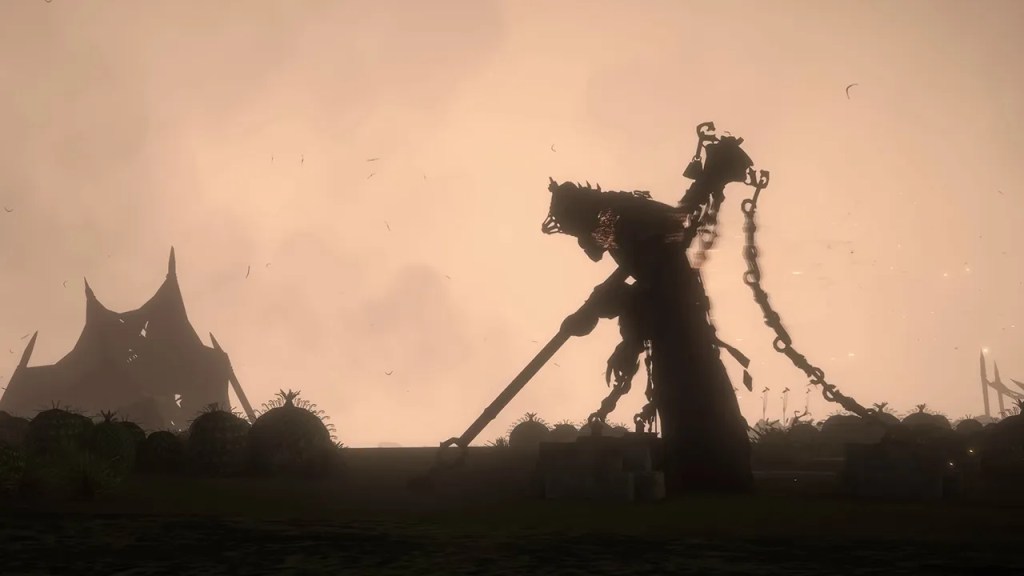
The art is scored with thick, dark lines and deep shadows, leaving what colour there is dulled, yet still a great contrast to the dreary surroundings.
Music
The music at the main menu swells, before descending into an eerie drone.
Darkest Dungeon, before it’s demanding, is one other thing: Stylish.
And that’s enough to pull anyone in.
“Overconfidence is a Slow, Insidious Killer”
Then you get to difficulty selection.
You may know already that I prefer to take whichever option is the most “canonical”. The experience that the developers intended. In this case, “Darkest”.
I knew the game was, on some level, meant to be punishing. Similar to X-Com where not every soldier is meant to survive every fight, Darkest Dungeon is designed around the idea that persistence pays off in the long run (even if that poor Highwayman in the front row has to be decimated in the short-term).
So, I figured putting it on “Radiant”, the lower difficulty, would ruin the experience. It would be almost 10 years before I realised that assumption was wrong.
“In time, you will understand the full extent of my failings”
I began my Darkest Dungeon journey, got far enough to unlock “Long” quests, and crashed out.
The drain on the party, hamlet and myself was just too much. Sometimes you’d complete a Long without even using all your camping supplies and other times they were gone by room 3. If that wasn’t bad enough, these failures carried forward, because the resources were still spent, characters still injured and time still wasted.
I revisited Darkest Dungeon 1 year later, in 2018 (with save file called “Re-Visit”). Quit to having the Pig boss in the Warrens wipe my best team.
Then, I have a save in 2021 (called “2021 LOOOOOOL”). That one I can’t even remember.
Next, 2023 (with a save file called “2023 LOOOOOL”). This one I got further than ever, then had a bandit king attack the hamlet. I was unprepared, but got all the way to the final turn of the final fight. Turns out, that matters not-a-jot, and failing that encounter despite performing beyond admirably left a sour taste.
This isn’t Dark Souls, where a boss being 1 hit away and then failing means you can go back, do 1 hit better, and win. Dark Souls isn’t actually punishing because Dark Souls lets you bash your head against the wall until the wall breaks, or you give up and suffer no ill consequences.
Darkest Dungeon doesn’t have the give up option, or at least not without consequence like in Souls. In Darkest Dungeon either the wall breaks, or your head does.
It doesn’t matter how close to victory you were, there’s no “Next time” in the same way there is for a Souls-like. Sure, you can attempt the mission again, but it’ll be generated differently, probably with different heroes (If you attempt it right away) and with no way of knowing you can even get the boss back to that 1-hit-to-go state.
So that was the end of the 2023 foray.
“Confidence Surges as the Enemy Crumbles”
2025.
I reinstall Darkest Dungeon because Darkest Dungeon 2 was free for a weekend, and I abhorred it. If you like it then more power to you, but all it made me want to do is reinstall Darkest Dungeon 1.
Incidentally while we’re here, I wouldn’t loathe Darkest Dungeon 2 so much if they’d had just called it “Darkest Dungeon: The Carriage” or something, since the game is in essence a spin-off not a sequel. But, I digress.
I get to the narration, the art, the music. I fall in love again.
Next up: Difficulty selection.
It’s been almost 10 years.
I enjoy the game when I play it, but there’s always a stopping point, always a point I lose too much.
Maybe, I think, it’s time to try Radiant?
And this is where I look up the differences, just to be sure I wouldn’t be ruining the core experience.
And this is where my jaw drops, and I laugh out loud.
Because Darkest Dungeon has one of the best difficulty choices I’ve ever seen in a game, and all this time I assumed otherwise.
See, in a turn-based game like this difficulty options usually amount to “Enemies deal 30% less damage“. That, to me, would throw the core lethality of the experience out-of-whack, which is why I avoided it.
However, that’s not what Red Hook Studios did. At all.
Radiant difficulty in Darkest Dungeon, instead, rebalances the economy, progression and upgrade paths. It retouches everything – except for the combat. A party of a certain level with certain equipment will be in an identical situation in both Radiant and Darkest. Hitting the same amount, taking the same amount of damage, etc.
What Radiant does, is allow heroes to be better equipped and prepared at earlier points, as well as be used in dungeons further below their own level. This, combined with the easier economy, means that combat isn’t any less lethal in an objective sense, but is a little less punishing.
Losing a character still hurts, but another can be trained and equipped far more easily than on Darkest. Bosses still require the same level of damage and optimisation and careful selection of traits to avoid powerful status effects, but all that stuff is just a little easier to access.
Instead of dumbing down the core gameplay, they instead dumb down the meta-progression system. This, to me, is beautiful.
Comparing to Dark Souls again (Since it’s always in the “easy mode” debate) it’s the equivalent of permanently having a “Gain 20% more souls” buff in Dark Souls. The enemies still hit the same, you hit the same, and if you keep dying you’ll still lose all your souls. *But* those souls are easier to obtain, and you’ll get more levels out of those enemies (If you succeed) than before.
This is the level that Radiant operates on, and it’s made my current playthrough so much more appealing. I still don’t know if I’ll finish the game entirely, but with 8 years of experience and easier progression I’m sure I can give it a good go without the risk of so sour an ending.
The most important thing to me is that I know when I walk into a dungeon that it’s not been baby-proofed for me, and that if I get through it it’s because I chose the right equipment, skills and items just the same as on Darkest.


 Frame Imperfect | Gaming
Leave a comment