Once upon a time everyone watched the same content, at the same time, and spoke about it at the same lunch break the next day. With old-fashioned broadcasting slowly falling into antiquity, it’s becoming harder and harder to create a coherent audience which can have coherent conversation.
Just one day after a game or show releases there’s already a granularity to the audience. Some have seen one episode or played one level, some watched on the train home while some watched in a home cinema. Some played in co-op, some played solo. Some have finished the entire thing already!
With so many different people experiencing content in different ways at different times, spoilers became a minefield. What constitutes a “Spoiler” is almost a quantum metric. You can’t truly know if what you’re about to say “counts” as a spoiler to someone…until you say it, and see.
And to the Victor, the Spoils
Let’s look into that subjectivity, and the unknowable-ness of whether something is a spoiler.
Spoilers ahead (or maybe not???) for the media listed below:
Harry Potter, Game of Thrones, Halo 4, Call Of Duty: Modern Warfare 2 (From like a decade ago, not the new one), Space Marine 2,
If we’re to have any hope, we need some examples of spoilers and we need to cross-reference them to see what’s similar, what’s different, and how many people consider it a spoiler.
Spoiler Type 1 – Spoiling a Twist
An easy category to start with is what I’d call the classic spoiler. Dumbledore dies, Joffrey is assassinated at the wedding, Cortana dies at the end of Halo 4, Shepard betrays you (Call of Duty, not Mass Effect).
These are moments pivotal to the fates of characters and the plot, and these events all take place near the end of the media in question. In some ways, they are all “twists” and so revealing them innately ruins their intent in the media, thus “spoiling” it.
Spoiler Type 2 – General Story Direction
There’s information that might hint at a story beat or gameplay mechanic that is as yet undiscovered. This information isn’t as on-the-nose as the the classic, but can still spoil an experience for someone.
This one, oddly enough, is usually not caused by talking to other audiences. Actually, this type of spoiler is usually the result of bad trailer construction and in-game menus.
Two examples:
Bad Trailer Construction – The Yakuza games are famous for their trailers being ridden with spoilers. You won’t see any “Dumbledore Dies” moments, but there’s enough context to many of the scenes that parts of the game are, in effect, lessened when you play them.
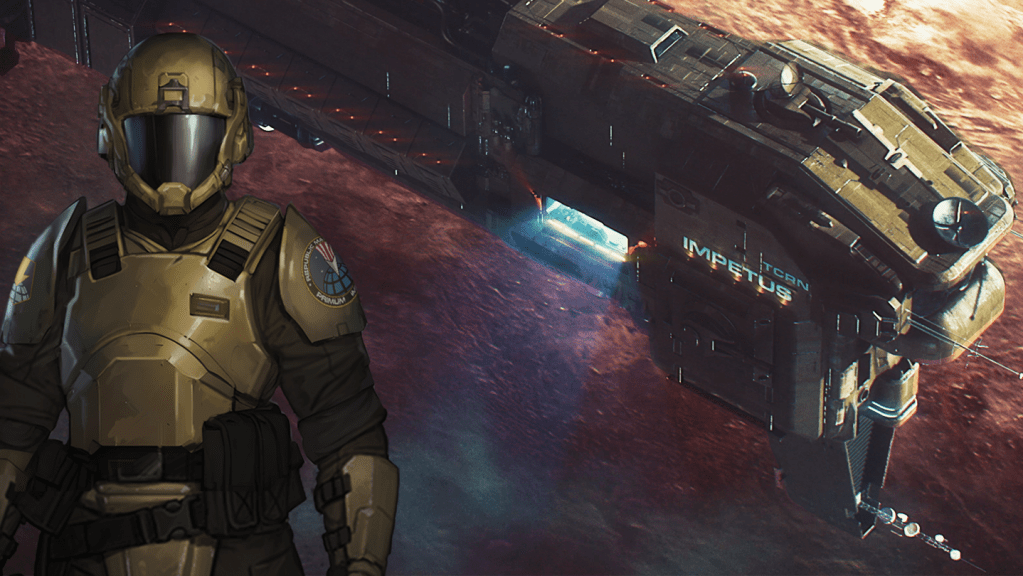
The most recent and a heavily egregious example is Space Marine 2. Space Marine 2 revealed the secret enemy, hiding in the shadows of the first few missions, in the announcement trailer. No one who was vaguely aware of Warhammer 40k wouldn’t recognise the colours of Rubric Marines coming out a warp portal…
In Game Design – Achievement lists are a common source of in-game spoilers for boss names, locations and more. Once again, it’s not as forthright as “Dumbledore dies” but they can still spoil an experience or reveal.
Already it’s hard to discern between the two. Everyone understands that “Dumbledore dies” is (Or at least, “was”, more on that later) a spoiler. But, it’s future content just the same as knowing achievement goals or seeing revealing scenes from trailers. Yet, we don’t call those elements spoilers more often than not.
Individual differences in what we recognise, what we remember, and how that affects are viewing make the spoiler minefield incredibly subjective.
If I have seen a scene in a trailer I can generally place it by the lighting and location when the scene is then played in the game. For a lot of scenes this makes no difference, but if the trailer design is particularly stupid it can actually make all the difference.
Someone else might never join those dots, so to them that same information is of course not a spoiler at all.
Hints vs Spoilers
As a quick aside, this problem extends not just to trailers and achievement names but also the content itself, and things like statements from devs or actors that provide “hints”.
If you have to join dots to reach the spoiler, that in itself convinces many people that it isn’t a spoiler, it’s a puzzle and your reward is working out the story.
If I manage to piece together a vital plot point early, through various hints both in and out of the game, that’s something my intuition and engagement rewards me with.
The problem with that thinking is that anyone able to do that, and engage on that level, is the last person who’ll want any form of spoilers.
Obviously working out plot points is natural, and almost always happens before the reveal, but it’s usually at a point designed to give players or viewers the right cool-off period between thinking they’ve worked it out, and the confirmation they have done so.
Spoiler Type 3 – Non-Story Details
This is the crux of the issue. We’re now getting into information so detached from the story, that the majority won’t consider the revelation a spoiler. After all, if the information has no bearing on the story and plot, what can it be “spoiling”?
The gameplay experience and authentic reaction to it. That’s what it can be spoiling.
For example, if I start a game and it’s a standard FPS. Moving, shooting, crouch, peeking cover, etc. Nothing untoward. But seeing an achievement name, or someone talking online (Avoiding spoilers, mind!) mention a weapon or a mechanic that hasn’t been introduced yet can break that reveal.
Games are more than their writing and story, they are their gameplay. They are their progression systems. They are their player choices.
It’s not vital to the story that later on you get to drive a tank, or use a sniper, or tame animals. But, it is vital to the pace of a game, to the mouthfeel of the experience. I want diversification of gameplay to happen naturally and without my knowing so that my reaction is “Oh F%$K there’s vehicles in this???” not “Ah, now we get the vehicle segment”.
I’ve seen this debate unfold when watching a streamer play through blind first playthroughs of RPGs and such. People know not to say Classic spoilers, some even know not to say general spoilers, but very few people think that “Ah just wait until you get the spear it kills those things way better” is a spoiler.
I don’t want to know you get to use Jump Packs later on in Space Marine, I want to wonder if I can. I don’t want to know that you can get flying mounts later, I want to wonder what I’m missing to reach that collectible.
For many people, this level of spoiler simply doesn’t exist, because if the information doesn’t directly relate to the writing and story, it doesn’t count as a spoiler.
I feel like that’s a disservice to what games are. Games are more than their writing and story, they are their gameplay. They are their progression systems. They are their player choices. And so information about any of these is, in effect, a spoiler.
Spoiler Type 4 – Source Material and Time
Here’s an interesting one, and links into the first nicely.
Is it a spoiler to tell someone going to see a film version of a book, what happens?
This is kind of a twofer as time plays a big part in people’s answer. We tend to believe that if a film is 20 years old, you can’t spoil it. Everyone has had their time to watch it.
Thing is, someone might not even had been born then, and they still deserve to have the same experience (Especially for films which haven’t been done quite the same since then…) not to mention adults who have only just discovered they like a genre, and are just now hoping to get into it all.
Despite that, there’s a general consensus that time is important to the classification of a spoiler.
And that throws a spanner in the works for adaptations, too.
A book could release, and the film only happen literally centuries later. In that case, does the spoiler timer “reset” to whenever the most recent depiction of the story is?
But then how about stories we are meant to know? Often “reimagined” classics made into films actually want you to know the original direction of the story so that their own twists and depictions and interpretations can be differentiated.
So, maybe it’s less about time and content and information but more about what we are “meant” to know, from the creator’s perspective?
Well, that would be fine if they weren’t constantly spoiling their own creations in trailers, interviews and the like.
As you can see, it starts going around in a bit of a circle.
Preface Your Statements
There’s no way to prescribe a set method of discussing spoiler-adjacent topics, but in the meantime I personally appreciate things like saying “The end of the game when you fight the Lord of Change was dope” rather than “The Lord of Change was dope”.
It means everyone can talk about whatever they want, and people who want to avoid that have the option to scroll on after seeing the prefacing statement.
Realistically, though, the people who see potential weapon unlocks or enemy types as an equal spoiler to a protagonist death are probably few and far between…


 Frame Imperfect | Gaming
Leave a comment