
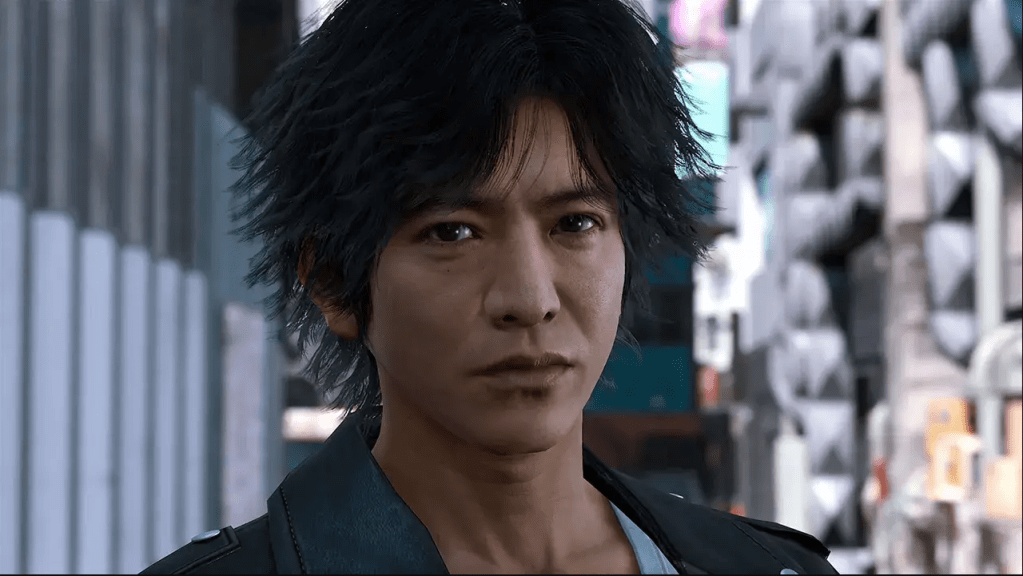
The Yakuza / Judgement universe isn’t one to shy away from character deaths, at least until you hit Yakuza 6 and it all gets a bit “Marvel” in that everyone seems to survive everything.
The Judgement and Lost Judgement games have the benefit of existing in the same universe as Yakuza but following an independent story, with its own levels of violence, crime, espionage and death. This allowed RGG Studio a chance to re-frame what a death *means* in the RGG universe, as they weren’t tied down to years of setting expectations from Yakuza.
Lost Judgement manages to get flak for the way it handled a specific death, but I maintain it is the most impactful and brilliant way to have done so, which other games since have never achieved.
Spoilers ahead for Lost Judgement.
Meeting Our Victim
The main event that this portrayal of death (and the effects of it) revolves around is that of Sawa-Sensei (Sensei being a title attributed as she’s a teacher, rather than her name, but this is how the protagonist Yagami refers to her both before and after her death without fail).
Sawa-Sensei is, for all intents and purposes, an innocent bystander. This is a teacher who did her best to address issues of bullying, but herself faced “bullying” of a different kind (Pressure from other staff, the principal, etc) to essentially let smaller issues go.
Even then, she never stopped trying, albeit a little less than she could have been had she not been held back by those pressures.
Ultimately, the murders and schemes of the game’s main villain are his own, Sawa-Sensei is not an accomplice and in every moment since the pivotal event in her past, she works to “redeem” herself of a “sin” she never really committed.
There’s a lot that could be said about “the absence of good” for Sawa-Sensei. She didn’t do anything “wrong”, but could have done more “right” and that’s where her guilt comes from.
Personally, I think the existence of that guilt helps negate the idea that she is in any way responsible for any “wrongness” at play. But this piece is about what comes next.
This is the character the game sets up, a flawed but determined and “good” person.
Is 50 times enough for her death to no longer matter. Is 100 times enough for her death to no longer matter. When is enough?
How Sawa-Sensei’s Death is Handled
When Sawa-Sensei is killed, it is in fulfilment of a threat that turned out not to be a bluff. It is also directly caused by a scheme initiated by the main antagonist, but enforced by a connection of his.
The antagonist in question began this crusade to make sure no child was ever bullied without their bully being punished.
The irony being that Sawa-Sensei was a champion for anti-bullying in later years and that she is most innocent of all the characters involved, yet she was killed in pursuit of that revenge.
Similar to Sawa-Sensei’s past, there’s a lot that could be gone-into regarding her death, but my main point for this article is the bit every player will remember, and was even memed about and made-fun-of…
“What About Sawa-Sensei?”
From the moment Yagami finds Sawa-Sensei, he gets a new catchphrase.
I jest, but it is actually unreal how often and how many times we hear “But what about Sawa-Sensei?” or some permutation of that, right up until the final boss fight itself. Yagami will ask again and again, to the antagonist, his accomplices, everyone.
Players have been seen online saying all sorts of negative things about this. The repetition gets memed about and some even say it’s lazy / poor writing as the plot never feels like it advances past Sawa-Sensei’s death because Yagami won’t let it.
Yagami is forcing us to face the fact that we normalise these things too quickly.
I’d agree that Yagami holds the grand concept of what the antagonist is doing back, and holds attention instead on the single act of killing Sawa-Sensei.
But I’d disagree that this is poor writing.
Death Doesn’t Stop Being Death
Lost Judgement does what few games allow themselves to do. It gives us a protagonist who won’t let go. Not because it’s heroic for the story or because he needs character arc for the plot, but because he’s just straight up correct.
The writers don’t care if you hear “What about Sawa-Sensei?” 50 more times, because the entire point of this writing and the entire point of this repetition is to make you finally come to the realisation:
Is 50 times enough for her death to no longer matter. Is 100 times enough for her death to no longer matter. When is enough?
After how many reminders does an innocent woman’s death become meaningless? Become boring? Become irrelevant?
You realise that no, the game isn’t in the wrong for Yagami harping on about it, we’re in the wrong for seeing it as “harping on”.
Players are prone to want the next story beat, the next big reveal.
Lost Judgement has the guts to say “No, you think about this. You stop for a moment, and remember that no matter what happens in the game for the remaining 20 hours, Sawa-Sensei is still dead”.
The game provides a permanence to Sawa-Sensei’s death through Yagami in a way no other RGG game does.
Many games have moments at the end where the protagonist looks back on all the people they’ve lost before delivering the final, avenging strike.
Yagami has no such pleasure, because he doesn’t care about the spectacle and the heroism, he just wants justice for an innocent girl’s death.
Never Stop Caring
Anyone who says “Ugh I got so sick of every line being about Sawa-Sensei in the second half” is demonstrating, beautifully, the entire point. Yagami is forcing us to face the fact that we normalise these things too quickly.
No one has answered Yagami. When he asks, he is never given a good, justified reason for her death. But he isn’t going to be made to clutch at straws. He isn’t going to bend to the demands of others who have moved on, he’s going to drag them back and hold them accountable.
We see this in real life. We’ll see someone provide evidence for an argument and people see it, come up with something they think approaches a reply, and that evidence is chucked into the “dealt with” bit of their brain. They expect the person to go find more evidence, different evidence, to clutch at straws. But, we don’t have to. We can just say “No, look at this” over and over until they do.
I love that Yagami repeats it over and over, to the point where real life players become vessels for the message Yagami is sending.
It doesn’t matter if someone gets bored of your argument, or has different arguments to talk about, or has forgotten and moved on. If you remember, and if you care, and if you never got an answer, you are well within your rights to just. keep. asking.
The antagonist is happy to go on about other victims, other events, other concepts. But no one ever addresses the question directly.
“What about Sawa-Sensei?”


 Frame Imperfect | Gaming
Leave a comment