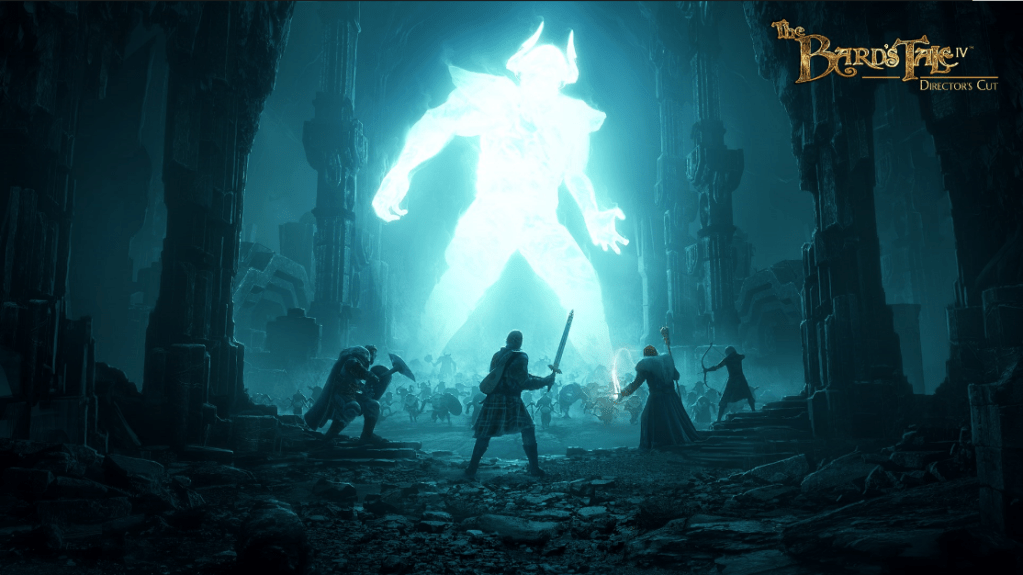
The Bard’s Tale is a series reaching back to the 1980’s. A dungeon-crawler and text-based RPG that tested player’s memory, map-making and ability to cope with enemy attacks which drained levels from your characters.
Old-School in nearly every way, the series’ always shared footing with the fantasy world’s of pen-and-paper RPGs in a way we might think the recent Baldur’s Gate 3 does for modern audiences.
But how does the formula persevere in The Bard’s Tale IV, a game which overhauls the 2D art and layers on mechanics, combat movement and 3D environmental puzzles? And more importantly, is it worth the download…?
Is Bard’s Tale IV Worth It – Summary
Reasons To Install
- Authentic Gaelic OST with real historical performances throughout
- Huge array of combat options compared to classic dungeon-crawl gameplay
- Environmental and story-based puzzles are excellently designed
- Combines the stories of previous games with no prior experience needed
- Actually plays like a classic RPG modernised, rather than a modern RPG sprinkled with classic themes
Reasons to Skip
- Optional puzzles and archetypal puzzles get ridiculously tedious
- Animations are clunky
- Some soft-lock bugs requiring a reload
- Actually plays like a classic RPG modernised, rather than a modern RPG sprinkled with classic themes
Most Unique Feature
Puzzle Weapons. Puzzle Weapons are weapons which are inlaid with runes, gems, rotating parts, receptacles and riddles. You manually inspect, rotate and use the weapon to solve its puzzle. When complete, puzzle weapons are some of the most build-making equipment in the game.
Is The Bard’s Tale IV Worth It for Combat?
One of the key pillars of these RPG’s is the crawl. The relentless throwing of oneself against waiting enemies and hoping your HP bars aren’t eroded by the end of the corridor’s encounters.
The Bard’s Tale IV is no different in that respect, with encounters waiting around every corner. The key difference is you won’t be having Final Fantasy style random pop-up fights, but rather enemies will be within the world itself, wonderfully 3D modelled (although not so wonderfully animated, but we’ll get to that).
Enemies existing in the overworld means there’s room for preparation, avoidance, even sneak attacks. Once combat starts you all cordially agree to an engagement, as you are on a grid with your party, while the enemy is on a grid with theirs (I’m not sure how the trolls and ogres got the memo that these are the rules of engagement, but alas).
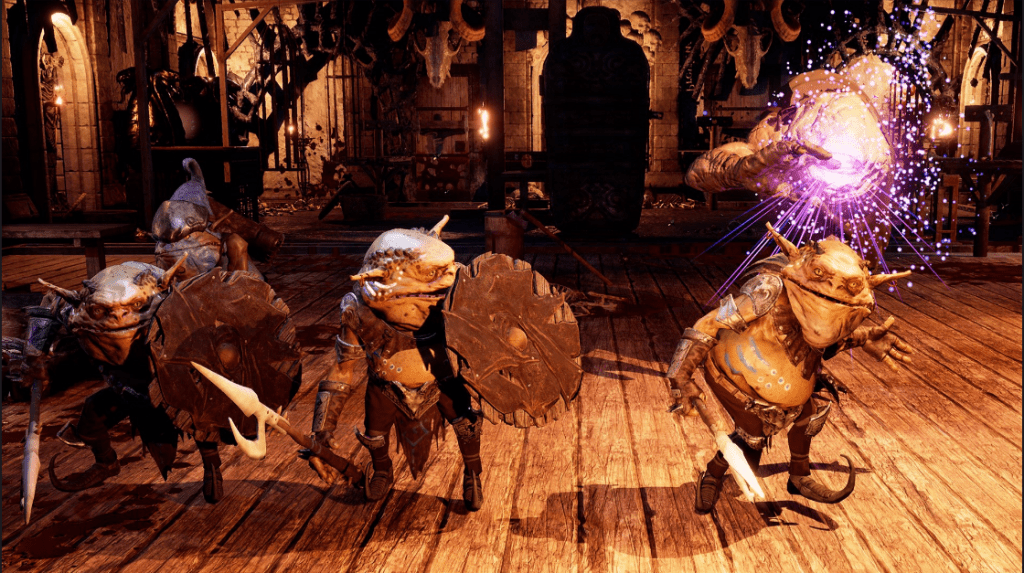
In combat there’s actually quite an expansive system to get into, especially towards the middle and end of the game:
- Movement – While you each have a grid, both enemies and allies can move around their respective sides. This adds a level of engagement beyond simply clicking and waiting for the enemy or yourself to burn-out first.
- Zoned Attacks – Coupled with movement, attacks which only hit certain zones are your bread and butter. Hitting the back line, hitting only those diagonally to you or hitting one enemy and any enemy immediately behind them are just a few examples.
- Zoned Buffs – Just like attacks, buffs and friendly spells can often have zones in which they can be cast. More importantly they also have zones in which they persist. This means a buff-mage (or buff-bard in this case) needs to be in the firing line to make the most of the buff for your team.
- Concentration and Mana – In classic “It’s hard to sing a nice healing song about puppies with an arrow lodged in your arm” style, spells and mana react to damage. Both generating mana and using mana are actions you want to time correctly.
- Equipment – Beyond your class skills, combat is focused around equipment attacks and abilities. By the end of the game I was combining weapons which generated huge amounts of mana with spells which used “x” to wreak havoc, but this wasn’t in-built in the class, only triggered by using that specific weapon and shield.
With all these elements combining, The Bard’s Tale IV does a lot more in one fight than your traditional dungeon-crawler. Fights are more infrequent and are permanently vanquished upon defeat, so each fight itself can last far longer and be more in-depth as a consequence.
The final boss of the DLC content took me a good 40 minutes or so, and that was just the attempt that succeeded.
This combat lends itself to tacticians, min-maxers and those who like assigning party roles.
Are The Bard’s Tale IV Puzzles Too Hard?
The Bard’s Tale IV does not shy away from puzzles. You’ve got environmental navigation; ropes to climb, portals to go through mazes to navigate etc.
You also get your fair share of puzzle “archetypes” which are just standalone mechanics purely in the game for puzzles, rather than tied to “natural” navigation or environment. For example one archetype has you leading faeries to set goals by turning totems which scare, attract or turn the faeries. Another variant sees you lining up pipes to make sure energy flows from one place to another.
Finally, there are “unique” puzzles such as using music cues to play a tune on a set of bells, or aligning a table to match the story of one of the titular Bard’s Tales. These are by far the highlight, as they are the right balance of difficult but solvable and rely on accessible lore within the game.
Many of the end-game puzzles which fit an archetype (Faery, pipes, rotating cogs etc) get a little ridiculous. We’re talking 3 rooms, each with a pipe puzzle, which lead to the final room which is also a pipe puzzle and if the other 3 are “solved” incorrectly the final one is impossible.
If you have limited patience, no joy for puzzles at all, or are averse to looking up solutions then the final puzzle of each type may be too much for you. In fact, judging by the achievement stats, many of the ones before the final ones may be too much.
Personally, the rest of the game shines enough that I’d advise just using a guide after your obligatory 10 minutes of spinning dials and pipes around. This only applies to the very end-game puzzles, as during play I happily spent upwards of that on other puzzles around the world which were properly engaging. Unlike combat, which can halt your progression until you beat it, puzzles are always just a Google away from being done.
The Real Reason to Install – The OST
I’m not ashamed to say I’m one of those people who listen to game OST’s outside of gaming. If I need some Rip and Tear or BFG Division to get through my day then I’m doing it.
The Bard’s Tale IV introduced me to 3 types I’d never had listened to before, and which immediately intrigued me.
The soundtrack can be roughly divided into two halves:
- “Videogame music” – Orchestral and themed music which plinks along in generic areas and combat.
- Gaelic Folk and Work Songs – Actual folk songs and working-women songs from industries like fishing, clothes-making and more.
- In-Game Songs – These are English-performed songs written in folk style, which are actually existent within the game’s universe
The Gaelic segments actually make up the majority of the game, as they apply to most open areas, towns, and specific locations such as the singer’s home or village.
The folk songs are reimagined and performed beautifully, with interviews from the Director’s Cut confirming involvement from Gaelic women who actually used these songs to regulate hard physical labour when using looms and working cloth in production lines. Not only is the music fantastic, it frames the world of The Bard’s Tale perfectly and brings you into an otherworldly yet undeniably real world. Basing the OST on these real songs, in a real language, was a genius move.
Do You Need to Play Previous Bard’s Tale Games to Play IV?
Absolutely not, but there’s a surprising amount of references to those games. The story structure is actually incredibly reliant upon the first 3 The Bard’s Tale games. Each of those games tells a story, or tale. In The Bard’s Tale IV you have to fight / solve all of them, just like the individual heroes from each previous title did in their respective games.
This creates a narrative which splits the game in to 4 loose chapters. You use the tale from the first Bard’s Tale, then the second, then third, then finally it all comes together for IV. All through the game you are having to use the overall stories of the previous games in puzzles, and hearing the Tales actually sung to you in certain segments. This creates a rich sense of place in the world.
Production Quality and Bugs
I almost don’t want to write this bit, because the secrets and combat combos and music of the game all outweigh what I’m about to say:
The Bard’s Tale IV does not run particularly well, has soft-lock capable bugs, and will feel “clunky” for the entire game, even once you settle in to the combat.
This could be a deal-breaker for some, after all why should you play a game which behaves like that when there are 20 other RPG’s which don’t?
The answer is that none of those RPG’s are The Bard’s Tale IV. You can get turn-based combat, party mechanics and puzzles anywhere else…but you can’t get Bard’s Tale IV anywhere else. It kept me engaged through crashes, broken animations, soft-locks and truly evil puzzle design at the end-game all because the other elements overcome it’s failures: Combat gameplay, puzzle weapons, music, story, characters all pull through.
30 – 80 Hours You’ll Never Get Back, But Couldn’t Use on Anything Quite Like This
Overall The Bard’s Tale IV Director’s Cut provides a meaty and authentic RPG experience that uses unique music, innovative weapon upgrades and immersive environmental / navigational puzzles to set itself apart from other RPGs of our era. This might make it seem dated and clunky, and it is, but that isn’t a curse. The game rewards those who work with it’s systems and invest in its world, but might be too long and tedious for a more causal or first-time player.




 Frame Imperfect | Gaming
Leave a comment